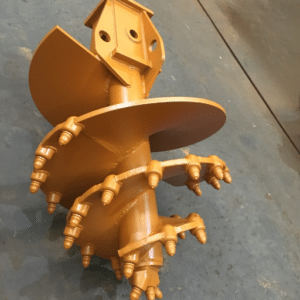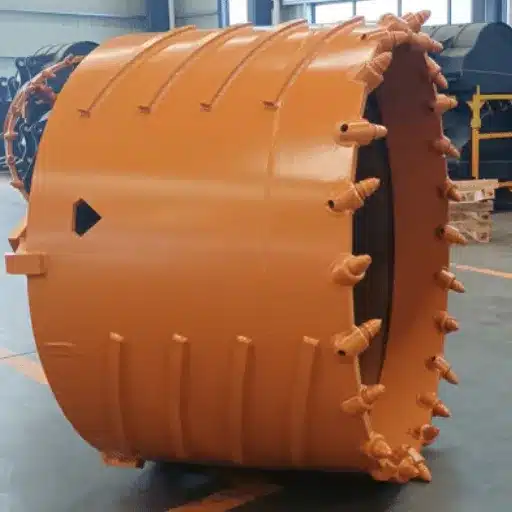
Accurate, precise core sample extraction for analysis is a significant requirement in the drilling industry, mandating the most advanced tools. The Criterion Core Barrel is a powerful, reliable tool that is the mainstay of many drilling projects. The tool is therefore designed to ensure maximum accuracy and optimal performance, even in the most demanding environments. This article examines the design and application of Criterion Core Barrels, highlights the core barrel augers and diameter specifications that affect the drill rig’s overall performance and accuracy, and provides a particular focus on how the features used affect performance. Therefore, we aim to present a comprehensive perspective on how Criterion Core Barrels elevate drilling technology to the next level. Additionally, if you are focused on improving operational efficiency or staying informed about trends in the drilling sector, this post will be highly informative. It will be an absolute must-read for you.
Introduction to Core Barrels
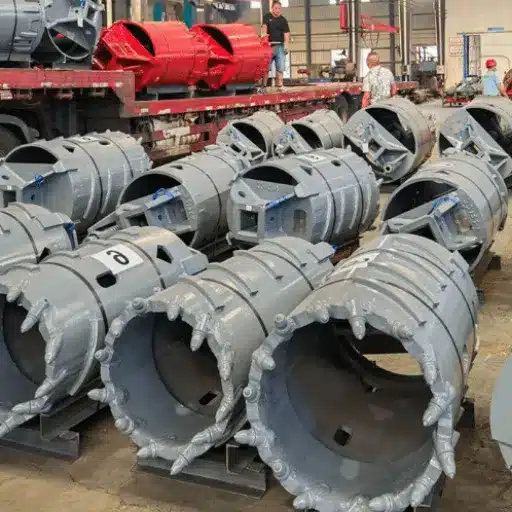
What is a Core Barrel?
A core barrel is an essential component used in drilling operations to extract cylindrical subsurface samples, known as core samples, for further analysis. These gadgets are designed to be robust, yet core recovery and integrity are not compromised. An assembly comprising an outer barrel, an inner barrel, and a core lifter is engineered to provide the best core recovery under all conditions. The use of new innovative materials and configurations in their production has made core barrels more durable, less susceptible to sample contamination, and drilling process a lot more efficient. Furthermore, they are employed in a range of areas such as geological studies, oil, gas and mineral exploration, mineral processing industries among others. The importance also lies in the fact that they help in understanding the subsurface as well as in making informed decisions on development and resource management based on the subsurface data as well as the subsurface structure.
Key Importance of Core Barrels in Drilling
Core barrel technology has advanced significantly in recent years, driven by the need for more accurate subsurface data in challenging drilling contracts. The present core barrels are quite furnished with the likes of wireline retrieval equipmen,t which in turn enables faster core recovery without the necessity to obliterate drill strings. Also, improved drill bit designs, incorporating diamond-impregnated and tungsten carbide materials, result in reduced wear and longer service life, even in abrasive geological formations.
These progressions are necessary for the improvement of core samples’ accuracy, mostly in the oil and gas exploration industry where the control of reservoir characteristics is crucial for production efficiency and environmental safety and thus meets the need of today’s technology. Another thing that has been done to the equipment used for coring is the making of pressure-maintaining core barrels that can keep the same pressure with the original conditions. This is crucial especially for the unconventional reservoirs like shale gas where the samples’ structural integrity is a must for the analysis.
The burgeoning of coring industry resulting from the application of both the latest material and engineering expertise into the core barrel designs has its main effect on (continuing of) the process of the drill optimization, cost reduction, and the acquisition of reliable geological and geotechnical data. Core barrels are still very much the key instruments for obtaining a very comprehensive knowledge of the underground structures, providing guidance to resource estimation as well as assisting in the formation of strategic development decisions.
Overview of Auger Technology
Auger technology breakthrough is a breakthrough in soil penetration and material extraction methods, especially tailored to the needs of those operations which deal with manageable and loose materials. The augers get the material moving by their helical screw blades that are spirally strung along the auger shaft, they can do it either in a vertical or horizontal direction. This is a very efficient way of removing material without making the drill or soil sampling process harder or more complex.
Auger technology has been on the constant lookout and the latest innovations have included the use of wear-resistant materials, the provision of more power and automation in the control of the power generation. These improvements have increased the depth of the penetration, performance as to torque and allowed the motor to be more user-friendly when it has to face difficult subsurface conditions. Environmental sampling, foundation piling, and agricultural soil studies are few of the areas where the auger systems are used most frequently now.
Adding highly advanced sensors to today’s augur rigs makes them give continuous soil properties information that are accurate enough for real-time adjustments. This feature helps in improving data quality and it also is of great importance to the knowledge of sub-surface properties. The auger technology still can do a lot as today it is used in different industries for the main reasons of cost-effectiveness, high efficiency, and little or no harm to the environment.
Specifications of Core Barrel Augers
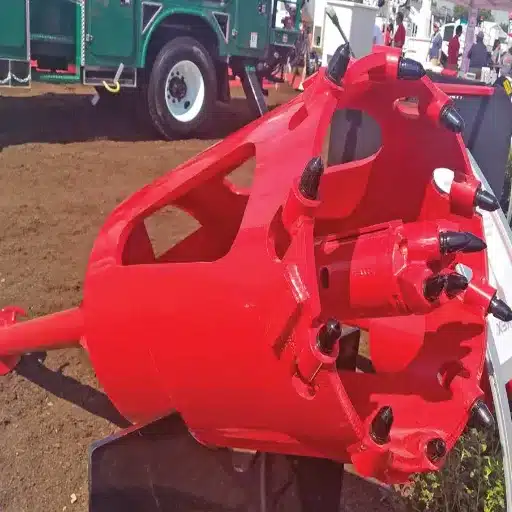
Diametric Considerations for Core Barrel Augers
The dimension of a core barrel auger represents a critical aspect that has a direct impact on the performance and use of the equipment. The diameters of the auger are usually varying from the small ones that are used in the case of geotechnical studies where the sampling has to be done very exactly to the larger ones that are necessary for the purpose of foundation drilling and other heavy-duty construction types of work. The choice of the diameter which is most suitable is determined by the soil characteristic, requirements that are project-specific, and the size of the core sample which is anticipated. Having the right diameter results in the penetration of the essence of the process, the least possibility of the surrounding being disturbed, and the extracted samples have their structural integrity enhanced. Moreover, the engineers, in order to achieve the highest efficiency of the operational equipment components and in the meantime reducing the wear of the same, have to consider the machine compatibility and the torque specifications.
Material Specifications for Durability
The decision of what kind of material to go with is a significant factor in the lifespan and work of components that are in diverse operational states. The most substantial contributor to service life is the material’s capability to withstand the stress, and this capability includes the resistance of the material to wear, corrosion, temperature change, and chemical reactivity. By way of illustration, strong stainless steel alloys are usually preferred in field conditions requiring the highest corrosion-resistance level, and the heat-treated carbon steel is an example of a material known for its high tensile strength for heavy-duty or intensive applications. The use of non-metallic materials like advanced polymer composites in the electrical industry as insulators and the chemical industry for the processing tanks is an example.
Material specifications should comply with international standards such as ASTM or ISO guidelines, as it is explicitly stated in the text that this will ensure compatibility and reliability. To prove that a material can perform as expected throughout its lifetime, among other things, the material that has undergone testing may be subjected to fatigue analysis and stress testing. In addition to this, coatings and surface treatments may be employed to achieve higher durability by either diminishing abrasive wear or preventing oxidation, thus prolonging the operational life of the part.
Design modifications and their Influence
Design changes certainly have a strong influence on both the functionality and durability of industrial components. The stress distribution in the material is directly related to the changes of geometric features, like chamfers, radii, or fillets. The outcome of this can be the improvement of the load bearing capacities by reducing the stress to a certain point through smoother transitions, as well as the creation of potential failure points, by some of the mentioned examples, like edges.
Furthermore, the consideration of manufacturing limitations and assembly precision should be part of the dimensions and/or tolerances changes, if those are ever to be made. The limit of tolerances is so severe that components can be put together and the one error could be minimized during the whole process. Using the finite elements analysis (FEA) among other advanced methods, one can actually examine the different scenarios which may arise due to these imperfections under different dynamic conditions, thus, point out the possible factors, which can be weak, before the actual prototype has been made.
Selection of material is closely related to design changes committed by the engineers, since the thickness of the part, hollow areas in profiles, and the use of reinforcements are the examples of modifications, which will help to save weight and yet maintain the original strength of the component. The aerospace and car industry is the best examples why such a kind of optimization is so crucial_ here we have the weight one and the performance and the efficiency gain.
Performance Factors in Core Barrel Operations
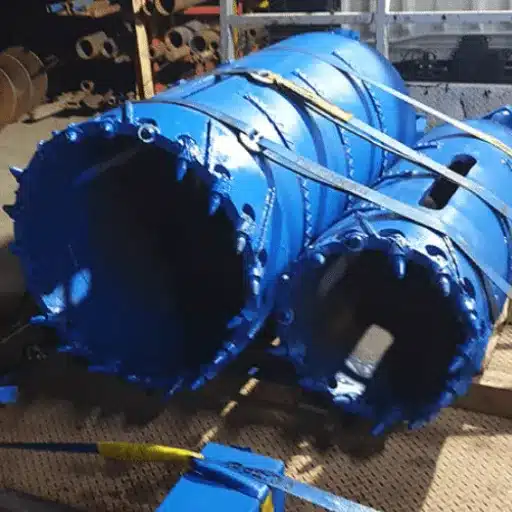
Efficiency of Drilling Operations
Drilling operations’ efficiency is dependent on many interrelated factors, which include drill bit design, material compatibility, operational parameters, and environmental conditions. Drill systems of today are very much about the highly complex technology of engineering, where the problems and the bad points of machines were turned into very low numbers. Innovators came up with the idea of boring tools being instruments of precision, accompanied by that shift to a new set of machineries also went the use of very tough materials that are not prone to abrasion to achieve the highest wear resistance. The systems of today have become very complex and all the decisions and the turning off the drawing board has caused the market tendency to the purchase of manufacturers’ products that have a well-researched technological base.errick’swin in the modern downhole motor extreme tests is the high rate of progress with the well drilling which also determines well productivity and the company’s income.
Innovation in drill bit technology, including the use of polycrystalline diamond compact (PDC) bits or hybrid designs, has resulted in a considerable enhancement of the cutting process in terms of minimized friction and the same performance on the different conditions of the substrate. Furthermore, the implementation of real-time monitoring systems has given the operators the ability to adjust the parameters as per the live performance data, providing the best use of resources and the promptness of the issue detection. Such improvements highlight the need for the design specifications to comply with the operational requirements in order to achieve maximum efficiency and cost-effectiveness in drilling operations.
Impact of Core Barrel Design on Performance
The design of the core barrel is of great importance in the whole drilling operation and combines the efficiency, and the accuracy of the drilling process, more especially in the case of difficult geophysical or geological conditions. The advanced designs are based on the use of high-strength materials and geometries optimized to reduce mechanical wear factors resulting in an extended operational life and a reduction of downtime. The engineering of the tube’s inside and outside cores with extremely strict tolerances ensures that the core recovery is increased and there is also minimal disturbance caused to the borehole sample; which is of paramount importance for a true geological analysis. Also, the latest technology together with that of heat treatment and wear-resistant coatings is one of the factors that have been increasing the durability of the equipment, even if it is in the case of highly abrasive environments. The engineers are able to refine the designs so that they can take higher loads and adverse conditions by analyzing the stress and deformation areas on the computational modeling tools and combining these data with the field data. Finally, a well-thought and properly designed core barrel turns into better performance metrics, such as drilling rates, sample condition, and operational step reliability, among others, and this would offer a clear and visible advantage over the competitors in the field of resource exploration and geological studies.
Analyzing Core Recovery Rates
Drilling activities, in which rock cores are extracted and brought to the surface, are the most important part of geotechnical engineering because the recovered cores are the only direct source of information about the subsurface geological conditions. This is why the quality and representativeness of the core samples are essential. The borehole is considered a trajectory, so the term “core recovery data” is used to refer to the efforts to restore the originally drilled path with core samples. There are several methods for controlling the drilling and recovery of rock cores, for example; decreasing the speed of the drill, increasing the density of the drilling mud, and adjusting the drilling stroke length.
Applications of Core Barrels in Drilling
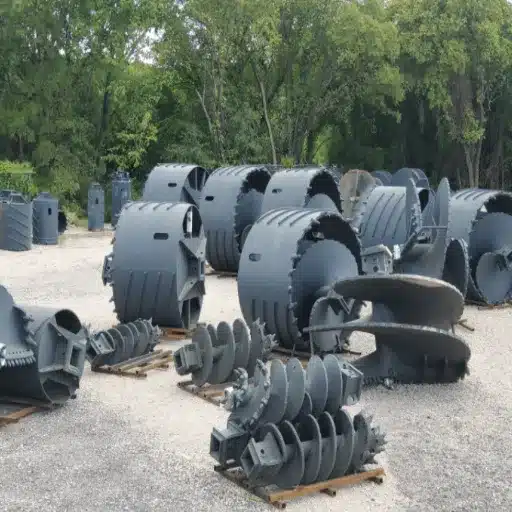
Applications of Geotechnical Exploration
Core barrels are required in geotechnical exploration as they play roles in taking out of the subsurface material and providing the same for the detailed analysis. Core barrels are crucial to preserving the structure of the core material and delivering the data of soil formation, and mechanical properties most accurately. They are primarily the source of information for an engineer in determining the location suitability for construction, the strength of foundation or the likely occurrence of a geological hazard. The overall precision and efficiency of the already existing geotechnical investigations conducted through the incorporation of the most advanced technological tools such as automated drilling systems and high-resolution imaging is boosted with the use of these cutting-edge technologies. Consequently, the time spent in the discovery of underground unusual occurrences or subsurface anomalies is notably shortened, and the decisions in engineering and environmental assessments are made based on a better understanding and research of the issues.
Mining Industry Applications
The mining sector heavily relies on geotechnical investigations for the assurance of safe and effective mining operations. With the latest technology, such as remote sensing, 3D seismic imaging, and geostatistical modeling, orebody geometry, structural integrity, and surrounding rock mass behavior get the most detailed insights one can imagine. Engineers can use these tools to optimize mine design, improve the recovery of resources, and treat landslides, land subsidence, and water inflow as their primary issues of concerns. Geotechnical parameters like stress distribution, and deformation are being continuously monitored, thus providing real-time changes and adaptive operations. The combination of these accurate methods not only raises the bar for safety in the mining industry but also opens the doors to a more environmentally-friendly direction of the mining business with a very minimal footprint on the surroundings.
Environmental Assessment Techniques
Assessment techniques are crucial in the evaluation and mitigation of the environmental impact of major engineering and industrial operations. The use of remote sensing, GIS (Geographic Information Systems), and predictive modeling, together with drones and satellite imagery, for example, is now the modern approach and has brought us a very wide range of beneficial applications, such as the control of soil erosion on a global scale, real-time monitoring of water quality and the detection of ecological disturbances, providing detailed data on the most critical issues. Environmental Impact Assessments (EIAs) cover ground surveying and collection of primary data (before the commencement of the project) along with the ecosystem health analysis which helps in identifying potential risks and their mitigation measures. The example to follow is the monitoring of air quality which is done by very sensitive instruments that detect particulate matter, volatile organic compounds, and other kinds of pollution. Thus, not only can actionable insights be made for the regulatory compliance aspect, but also the environment and the people who live there will benefit as a result of the stricter allowable emission limits being enforced. Environmental impact assessment thus can be carried out with the help of machine intelligence and human intelligence combined primarily to exploit only the best of both worlds while minimizing the worst.
Future Trends in Core Barrel Technology
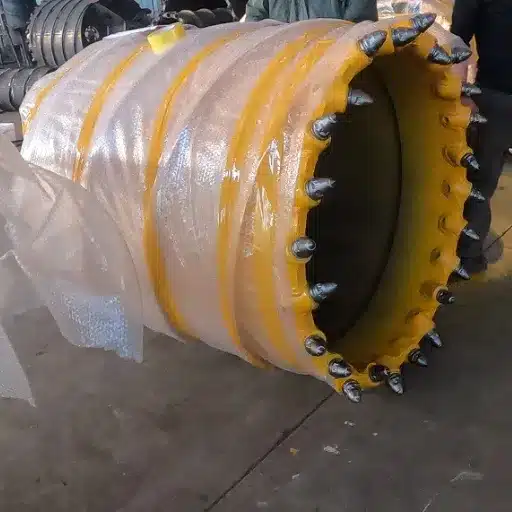
Innovations in Core Barrel Design
Based on my study, the latest innovations in core barrel design are aimed at increasing efficiency, durability, and adjustability to different geological conditions. The change in the core barrel corridor has been significant and this is due to the use of highly durable and tolerant to extreme conditions materials. The utilization of the most advanced composite and alloy materials in constructing core barrels has vastly improved their structural strength making possible their use in high-pressure and aggressive environments of the deep drilling industry. Besides enhancing the equipment’s long life, these material innovations also lead to lesser wearing and tearing as a result of which operation downtime is minimized.
Furthermore, modern designs now include more powerful means of cutting and obtaining core samples. Wireline core barrel systems are among the most recent innovations that have made the process of core recovery faster and less laborious as there is no need to pull out the entire drill string to get the core samples. Another advantage of modern core barrels is that they come with improved cutting teeth patterns and fluid systems. This means that the quality of the core is better and the percentage of the core being lost is reduced. Hence, it would be an indispensable solution for the projects, which are in need of a complete geological analysis, where the core-samples with almost the same nature will be taken.
Another note-worthy trend which has been on the rise is the application of real-time data acquisition tech inside the core barrels. Nowadays, through the use of sensors, one is able to quickly and reliably measure different parameters, including temperature, pressure, and stress, while the drilling process is taking place. The data-informed designs of today are, therefore, capable of providing very vital and precise information that has the potential to change decisions in real-time, as well as to increase the efficiency of drilling and thereby cut a big chunk off the project costs. It is a great thing that the centripetal effect of the integrations of mechanical as well as digital technology is to the benefit of the future of core barrel development where there will always be a balanced system operation and more precision in the rather difficult drilling sectors.
Impact of Technology on Core Barrel Performance
The core bar design is drastically changed by the use of highly developed technological systems. They have sensors that are very accurate and can collect a large amount of statistics about rotation, torque, vibration, and the general condition of the rocks in real-time. These sensors are connected through the IoT (Internet of Things) which also provides a huge amount of real-time statistics and gives the engineers real-time feedback. This allows the engineers to make very small adjustments during drilling and thus increase the drilling performance and lower the tool wear at the same time.
In addition, developments in machine learning and artificial intelligence had made data interpretation even more accurate. The predictive analytics at present are able to foresee possible tool breakdowns or suboptimal situations leading to the early adoption of preventive measures thus avoiding critical downtimes. This in turn has a significant reduction in downtime and operational delays as well as a positive effect on the overall project schedules. Not to mention that the modern software solutions also facilitate the post-operation analyses in detail which help in the continuous optimization of the design and application strategies for the core barrels in the difficult and diverse geological scenarios. The technological progression in this sector demonstrates a continuous strong overall commitment to efficiency and precision improvement in the oil drilling industry.
Sustainability and Eco-Friendly Practices
Surplus in the industry is slowed by the overall acceptance and enforcement of the related principles and practices throughout the operations of drilling, thereby reducing the negativity created. This is done by the pervasiveness of the idea that no matter what, the ecological footprint has to be decreased even in the drilling sector which has for long had the health and safety of the environment compromised due to resource extraction. The latest, the most innovative machines such as the ones that use less energy are the ones that are used by our company. They also use environmentally friendly lubricants, so there is less and less greenhouse gas emissions, and none of the soil and water contaminants are there to cause any damage. Through this, the strict control over and influence of the quality of these practices get exposed under disciplinary measures of all kinds at the same time as the practices are actually closer to nature and less harmful.
Waste management strategies are another area of my interest, like for example thinning fluids in place of recycling them and reinstalling the closed-loop systems which leads to the reduction of waste disposal by a great amount. Also, the usage of core barrels that are specifically identified for optimal resource recovery decreases the environmental impact caused by over-mining and hence protects the geological deposits and ecosystems in those areas. Many producers are now developing tools that are eco-friendly through incorporating sustainable materials and processes, thus greatly complementing the industry’s responsibility to nature. Constant monitoring and risk assessments are essential to ensure that sustainability is the centerpiece of all activities, from the initial stage to the end of the company’s life cycle.
In the end, sustainable drilling has a two-fold advantage—cuts down the environmental burden as well as increases the efficiency of the operation. Resource optimization, cost savings, and regulatory compliance are gained not at the expense of but along with nature preservation. Through the marriage of new ideas and accountability, I am part of a sector whose ethos is both making money and taking care of the environment the right way and the long term.
Reference Sources
Effect of Core Geometry and Size on Drilling – Auburn University
Discusses the impact of core barrel geometry and size on drilling efficiency and sample quality.
Long Coring on UNOLS Vessels: A Feasibility Study – WHOI
Explores the feasibility of long coring systems and their applications in marine sediment drilling.
A Study on the Influence of Core Stability – MDPI
Examines factors affecting core stability during drilling, including barrel design and operational parameters.
Criterion CORE Barrel Accuracy Evaluation – Sniper’s Hide
Provides an in-depth review of Criterion CORE barrels, focusing on their accuracy and performance.
Development and Critical Period Plasticity of the Barrel Cortex – PMC
While not directly related to drilling, this study offers insights into the term “barrel” in scientific contexts.
Frequently Asked Questions (FAQs)
How do auger criterion core barrels perform in rock-hard conditions?
Auger criterion core barrels are tailored for rock and hard formations and made to be of better endurance under high loading and with less wear and tear in contact areas. They are generally made with hardened cutting edges and more solid structures to withstand wearing during penetration. The right choice made according to the rock’s hardness and fracture behavior raises the recovery ratio and lowers the core loss. The cut should be aggressive enough for the rock to be cut but gentle enough to keep samples for lab testing. Also, old parts should be taken out and the new ones installed in time to sustain the performance loss in the hard rock operations.
What options are available to the field engineer tasked with selecting core barrel components for construction projects?
Field engineers are exposed to various option tiers when choosing core pitcher sections, which range from standard-purpose assemblies to exclusive pieces for specific building work. The freedom is in the hands of the engineers to set the depth, material condition, and bits ring connection which may either be standard or relatively long so coase diamond bits are multifunctional. The decision-making factors include maintenance, interchangeability with the available equipment, and the supply of the parts near the construction site even if it is in the middle of nowhere. They have to decide on one or the other of three different kinds of couplings (maybe working with distributors having different stocks in different areas), about having the whole sets and lots of service in a tertiary mine or open-pit project, or just the opposite – mated couplings, and very little and scattered service. Long-term total cost durability is oftentimes at a heavy price when evaluated with initial cost estimation.
Can the core barrels be used to cut through various walls and dense materials?
Core barrels, with a high quality of construction that is capable of cutting a wide range of materials of various thickness and reinforcement like reinforced concrete and hard sedimentary rock, are the popular choice as they provide maximum cutting efficiency for most applications. The barrel’s design, the type (diamond or carbide) and/or distribution of the diamonds and carbide matrix, and the speed at which the cutting is done are some factors that affect the performance of the equipment. It is suggested that the use of core barrels with thicker walls and extra reinforcement in their manufacturing is a common practice for heavy-duty applications to resist buckling and twisting. Moreover, rig users sometimes choose the rating of the barrel wall to match that of the load it is to carry so that the problems like early collapse can be avoided away drilling deeply and for a long period of time. When operated under appropriate conditions, lubrication and limited feed rates can significantly extend the life of the cutter and maintain the sample quality from being erratic.
How do manufacturing and craftsmanship affect the versatility of auger criterion core barrels?
Can manufacturing methods and the craftsmanship directly impact the usefulness and durability of core barrels specifically for auger bouts even if taking into account tolerances, material stress, and heat treatment? The manufacturing if it is done meticulously will clear up the contact between the parts and the correct arranging of the hole in the drilling machine, thus eliminating the evil of shakiness and also improving the quality of the core. The craftsman’s high skills provide the barrels with neat Series of welding, accurate Threads insertion, and balanced and synchronized Combination of parts that will become systems performing on the top level at all times during various drilling practices. The very fact that manufacturers are willing to present modular designs and still offer a full spectrum of accessories is a sign that versatility is always a defining factor. If one opts for brand quality manufacturers, who for some time now have been known to have a strict checking procedure, cores for all different types of work in the field will be supplied the barrels.
What engineering and other considerations make a core barrel equally useful no matter the special needs of the field or the work site?
Engineering considerations are the target formation type, expected penetration rate, core diameter required, and environment robustness. General-purpose barrels have an engineering design that can cope with diverse materials while the use of some particular fields might request special geometries among others. The thermal and fatigue analyses provide information on the material selection to resist cyclic loads during the long-term campaigns. Corrosion resistance and the ability to be easily serviced are also taken into account during the barrel design for the tough field cases. Engineers have to choose between.
How do different gear ratios and ranges affect the quality and accuracy of sampling?
The torque delivery, rotational speed, and hence, the overall mechanical advantage during sampling are affected directly by the gear configuration and the working range, which in turn determines cut quality and core preservation. It is often observed that heavy material penetration is easily achieved by using high-torque, low-speed gear setups, and in the case of softer strata, the higher speed settings are more preferable. The choice of appropriate gear ratios is the main factor that reduces the load on the whole machinery and prolongs the service life of precision bearings and threaded interfaces. The system may overload, the core may deform, or it may get damaged if the recommended working range is not kept. Consistency in sampling is maintained by regular calibration and careful attention to the quality of assembly even under different conditions.