Creating a safe and secure foundation on problematic soils is a daunting concern of modern engineering and construction endeavors. In this respect, the employment of CFA piling allows for successful completion of the jobs that might have been impossible with conventional piling. The aim of this paper is to analyze how the CFA piling method improves the resistance of problematic soils to the building loads by providing a critical examination of its innovative method and main advantages. For such soil conditions, there is the CFA method which, is specifically designed to address these technical aspects thereby ensuring both endurance and effectiveness of the structure. Continue reading to appreciate how the specially formulated system is making an impact in site development works as well as coping with the various challenging construction terrains.
Understanding CFA Piling

What is CFA Piling?
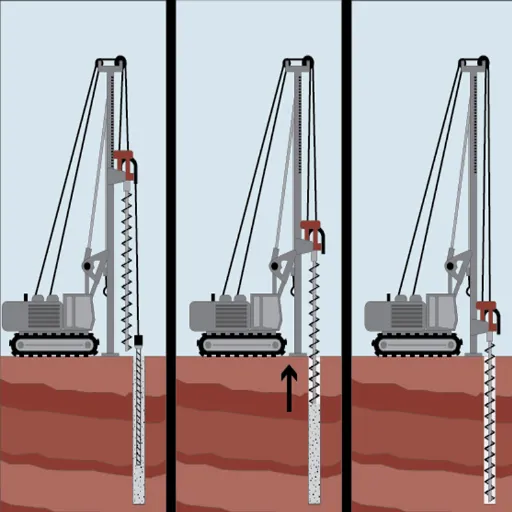
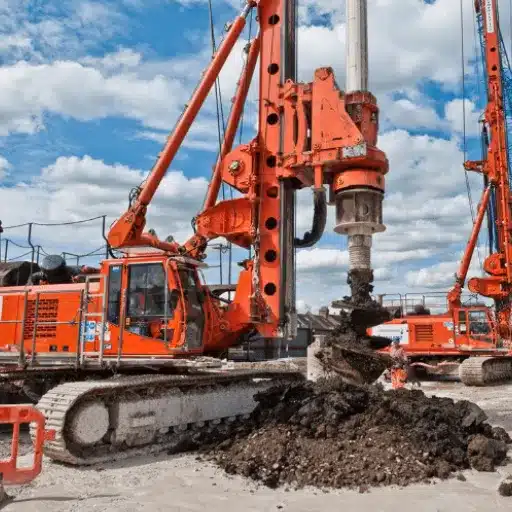
A widely regarded as the most common type of deep foundation system in geotechnics, CFA (Continuous Flight Auger) piling is a geotechnical construction method that is used in a range of soils. It basically involve using an auger that has a hollow center to have it inserted into the soil up to the necessary level where soil is then evacuated continually out of the hole and thereafter concrete is poured and pushed inside the hollow shaft as it is retrieved. Once the CFA auger is withdrawn, a reinforced concerte pile will be formed, which may also be enhanced by installing steel bars in the hollow space. The significance of theuality of clean filled cast-in-situ pile by filling the core and adding the bar is comparatively higher. Most suitable in areas of extensive marshy lands or regions with lose granular soils, with inum soil disturbance for the ambient soils are often strained latterally, it cures the soil flow problems of the said materials. Especially for towns, this is a modern working technology in the field of construction which serves to cope with two fundamentally different aspects in the existing catalogue and urban construction specifications: the requirements of safety and the requirements of the design and architectural solutions.
Components of the CFA Piling Method
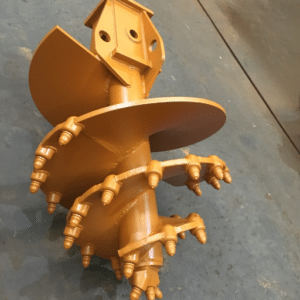
Entrainment of a continuous auger into the foundation:The first and the most important part is also the main working tool is an auger that performs boring into the ground. Such a shape of the auger designed for its continuous flight of steps allows for a rapid progress and avoids borehole deviations also without any difficulty in any type of soils. One of the best thing about this system also, is that no agitation of materials or disturbances have been recorded so far due to minimal horizontal benefit of this method.
The Machine for Concreting : The High pressure pump fills the machine for concreting with the boreholes while whole construction process commencing. This happens because the continuous pumping of concrete minimizes any voids within the pile as well as ensures proper concreting of the entire structure’s length continuously.
R Auger guide Crane:In order to carry bigger and better tensional loads, a cage of steel steel is deposited within a concrete from work. This adds both buoyancy and stability as the bentonite pump is capable of high loading.
Auto Detection Device:Also Webmail,the current technologies already have the padding monitoring systems which can monitor certain parameters such as the drilling length and diameter, penetrated depth, speed of the auger or retrieval drill, and the concentration of the concrete in the auger. Importance of similar systems lies in improving the Coordinator of the job to Specifications in the pile construction process.
Augering On Machine:Augering on machine is a steel pang connected with the energy that comes with the mortor and gears into auger or heap into the earth. In case of both other types of soils agricultural soild and engineered soils, the torque and design need the two designs also cannot be left out.
The CFA piling technique brings together the advantages of its individual components, providing a controlled, error-free mode of construction that can be laid to highly prescriptive limits, and even more specialized schemes in very challenging ground conditions.
How Continuous Flight Augering Works
Continuous Flight Augering is a method of construction that involves using specialized machinery and engineering knowledge with a view to bond deep foundation elements. The system functions as follows: the auger is pushed into the underlying soil at a continuous rate with the help of a rotary drive that moves the machine and ensures a continuous excavation of soil. The scope of the auger is driven into the ground up to the working depth or the full length not allowing the flights of the auger to get empty against the danger of collapse or side instability of the ground.
Achieving the desired depth then proceeds with the application of high strength concrete at a pressure through the hollow stem of the auger, which is retracted carefully. In this configuration, concrete pumping, in and out, acknowledges the vertical axis holding kelly bar that defines a continuous installation operation with no tolerance for voids on the wall. Reinforcement, usually a vertical rebar cage, is placed within formed concrete prior to curing of the concrete and that reinforcements help in providing the desired design criteria.
The CFA piling method is particularly liked as it creates minimal noise and vibrations, and this makes it appropriate for use in urban and sensitive sites. Owing to state-of-the-art technology, it is possible to continuously monitor drilling depth, rate of penetration, torque, pressure, and feed rate, hence accuracy in the concrete placement is maintained.
Advantages of CFA Piling
Enhanced Stability in Difficult Soil Conditions
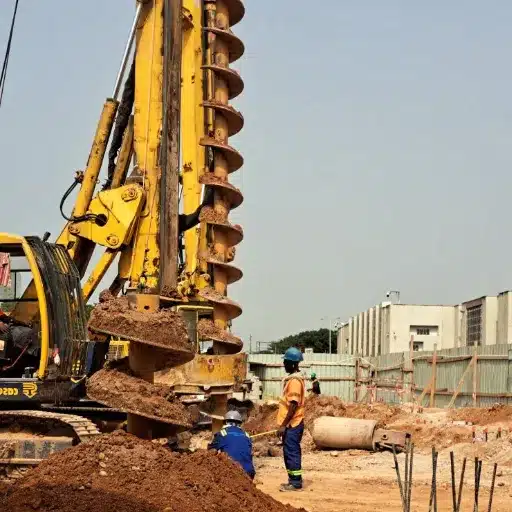
CFA piling has been proven to be remarkably sturdy even in the moisture-sensitive and deformation-susceptible PN soil. The West Java border is marked by barren slopes of the Sumedang highland north of Bandung, but with increasing elevation, the vegetation becomes richer and an intact montane ecosystem is reached at 1300 m asl. It consists of primary dipterocarp forest rich in palaeotropical tree species and higher up an even more moist environment on the volcano slopes of Gunung Halimun. Manaslu attempted 1,200 meters up without help. It enables the dental emergencies service to render assistance in minor problems of health without sending patients to the orthopedic department.
Speed and Efficiency of Installation
The main advantage of CFA piling which is in the lightning speed of execution its technologically innovative design actually presents. In contrast to tradition, it doesn’t come with much casing or mechanical driving so the total time taken to make a single pile is greatly minimized. State-of-the-art drilling equipment with advanced hydraulic technology focuses on maximizing turning speed and accuracy, and thus dramatically improves the speed of executing deep foundation works. Also, the benefit of not using temporary casing ensures that the operation does not need any downtime and works without glitch especially in fast track projects. These advantages are however made more effective through the use of self-adjusting systems which help in the adjustment of operational parameters such as rates of penetration and grout rates towards enhancing time of works and performance system. This help in fulfilling the project requirements within the set time framework and avoiding wastage of efforts on other construction activities has made it most preferable in city constructions and other projects that require rapid implementation.
Cost-Effectiveness Compared to Other Methods
CFA piling is a relevant and life-size construction technology that has various cost comparative distortions to the traditional foundation. This innovative technique can be adjusted to offer the critical sphere of cost analysis, especially in terms of the time and cost that involves the use of labor, replacement of materials as well as how fast the project can finish. As the method core underpins both the hard and the softwood piles, bullthe removal of temporary casings adds to considerable reductions in spoiling during meddling which in turn reduces the associated costs in the two operations. This system also slows down the hours of work by means of drilling blasting followed by concrete but most builders remove the concrete formwork before erection of the column is achieved. It is more advocated by far as the machinery of the preferment was equipped with the advanced technology which includes the use of computerized equipment in constructing this type of pile and also, it was in a continuation to enhance the sense of every engineering work which is conceived as a quality . Filmeuletty CAI piling provides better results and is considered a more appropriate method of placing piles in construction.
Disadvantages of CFA Piling
Potential Limitations in Certain Soil Types
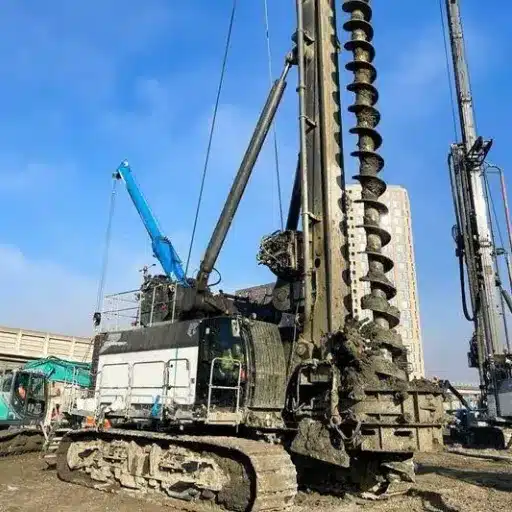
In specific soil conditions, the application of CFA piling can be limited despite of the versaltility and efficiency of this technology. Hardly any deep penetration can be achieved, when hard or very dense clays are met along with, in particular, a large amount of gravel or any other type of solid inclusion obstructed the auger during the drilling process. In such circumstances, adherence to any prescribed pile requirement or borehole steadiness expectation is likely to be a more desirable achievement. In the same context, when the soil is too saturated to have enough bonding or the soils are inherently loose, it is possible that such conditions will become annoying, where the borehole may back up before the concrete is poured and the pile integrity is not ensured.
Additionally, soil profiles are often considered highly heterogeneous within a singular site and so the use of techniques and equipment may also be altered. This scenario presents the risk of operational challenges which take the form of delays and increased operational complexity. To cope with such probable situations, it is most important that soil testing and geotechnical analysis should be done prior to each construction project in question to determine whether CFA (continuous flight auger) piling can reasonably be adopted or not (and identify other suitable foundations if at all). Including proper tools with high drive power and online monitoring systems is one way of eradicating some of the above mentioned problems. Yet this kind of change might switch many of these problems of operational nature to the problems of economic one by escalating project costs ones opted for.
Comparative Analysis with Bored and Driven Piles
Some slight technical differences exist in the installation procedure, the capacity to take the load, as well as the influence on the environment, given that Continuous Flight Auger (CFA) piles are stacked side-by-side against bored and driven piles. The best way to describe bored piles is the one where rotary drilling is used to clear the soil and then concrete and rebar are added in layers to control the size, angle and skew of the piles. It is explained the written particularly suit the issues especially with shallow and deep load adjustments. In contrast, driven piles are built using prefabricated segments which are often steel, concrete or wood and effectively pressed into the ground using a pile driving machine. This is applicable in creating cost savings for projects that require fast track construction but is interfered by a lot of noise and vibration levels that tend to affect buildings that are within the close vicinity.
On the contrary, Driven piles generate more vibration that result into soil sediment than CFA piles while utilizing the advantages of cast-in-situ piles and continuous augers. Despite this, stabilization of all driven pile types is achieved within the range of the restraining pressures and resultant resistances when put in place prior to use unlike in the case of CFA piles which greatly relies on proper grouting of concrete and monitoring during driving process amongst others. In addition to that, CFA piles are not restricted by poor drainage shield of a bored pile due to inability to cut foundation pit in water-logged soils. For some applications, this flexibility of doing a bored pile work without casing for instance, is a clear advantage as far as bored pile technology is concerned.
With regard to environmental concerns., driven piles are generally more detrimental than cast-in-situ (CFA) piles and bored piles since there are less noise pollution. However, with bored piles, there is a high probability of huge spoils and as such, it is important to see how the waste will be disposed. Therefore, the choice of one of two kinds of foundation is primarily dependent on the geological parameters present, financial resources, and ecological issues, the former indicates different mathematical models and empirical efforts to be of help in selecting the foundation design.
Environmental Considerations
Various factors including material acquisition, the actual construction and its effects relate to the sustainability of foundation systems. It is common for the building sector that constructiones reduce their environmental print by employing eco-friendly or low-carbon materials. Nowadays construction has been revolutionized by the application of innovative techniques such as core drilling or hole boring and vibration control. Stitt is a perfect example where resources are the greatest limiting factor hence steps have been made to minimize and instead encourage beneficial properties without increasing the cost. For practical environmental considerations, it is better to select foundation systems that also pay attention to spoiling and water resources. Use of life cycle assessments and environment sulci analysis in planning process helps in avoiding negative impacts and assure of infant compliance with environmentally friendly designs.
Applications of CFA Piles

Use in Urban Development Projects
Quite often, it is challenging to find space without people to install construction elements. It has been mentioned in the literature that CFA piles haven’t seen substantial alterations in there design but Many argued that the CFA piles have reduced volumes used of concrete during the pile boring activity that they lasted for length of 23metres without using reinforced cages.
New computer systems for controlling the CFA stake mean control of the stake length and alignment is perfect; a perfect cylindrical structure addition is done currently which retains stake end intact. Moreover, the fast and easy methods of assembly are in line with the increasingly shortened timeframes that are characteristic of urban constructions. All these advantages make CFA piles an attractive option for construction of reinforced concrete and high-rise residential buildings and multi-functional complexes considering peculiarities of the city under consideration.
Application in Bridge and Infrastructure Construction
Continous Flight Augers (often abbreviated as (CFA) piles) are special types of piles that are easier to use and economical thus common in the construction & particularly bridge and infrastructural works. These piles also have the advantage of reducing vibrations during shareholders of more of their load but the importance of the note is however the ability to work in environmentally sensitive areas. However these piles are primarily used in areas where there are dynamic loads such as in bridge piers, ground under construction as well as permanent engineered systems such as retaining walls.
Present-day developments relating to CFA piling, including but not limited to on-the-fly drilling, are making piling technology even more efficient by allowing precise adjustments to be made right in the midst of constructing a structure. By controlling structural laying parameters like the concrete flow rate and pressure the telescopic CFA pile tesing minimizes the probability of any deviation and as such increases the service level of the soil. Moreover, CFA piling works effectively on both weak and strong soils such as expansive and loose sands, enhancing the geographic range of applications of the technology. This package of features has made CFA piles the choice for the development of robust and durable infrastructures.
Role in Ground Improvement Techniques
Augmented reality as the answer to the limitations of on-site labor force, high expenses on materials and on the use of the complex and expensive machinery, as well as always changing environmentally sensitive designs. The measurement indicates the actual reality in the productive sector as every item that has been made has weight. Despite the fact that computer topic have already occupied mind of engineers and technologists becoming the dominating one, the operations management is what establishes the fit of the system.
In addition to the other methods mentioned above, mainly stone columns and vibro compaction, application of combined piles with continuous flight augers can help to develop the compaction within the treated ground. These adjunctive strategies of water content removal put less load for consolidation to occur as well as elevated effective stress, besides creating settings of optimum organizing. Application also refers to quality project execution and the choice in design permits the development of CFA piled foundation and achieve the desired engineering performance even under difficult soil conditions. Therefore, they have become and continue to be crucial in providing solutions to the present construction and engineering challenges.
Choosing a Piling Contractor for CFA Piling
What to Look for in a Piling Contractor
When one is on the search for a piling contractor for CFA piling, my features alight proficiency and triumph in the business. A professional with competence in CFA piling has often engaged in various CFA piling installations that have employed different site and geotechnical conditions. I also require references citing the GCCA qualifications that the contractor has and the degree to which the contractor is able to maintain them. It also emphasizes safe and accurate production of geotechnical socket or 30 and above–degree of Raked stubsteel beams; and working with ISO standards or the other methodologies with regard to sunken pile designs. Having such qualifications alludes to the contractors’ satisfaction for giving highclass service and priority for the quality of the output and not only the job itself and its other non-normative aspects.
Furthermore, I examine a company’s ability to make the most of modern technology and equipment. Computer-assisted piling rigs coupled with on-time monitoring systems considerably decrease the possibility of incorrect pile infill, possible destruction of surrounding soil or the entire structure itself. With such a rigorous process, it would also be likely that a good contractor utilizes techniques like the monitoring of data as it helps to verify of the con-structive data of the piles after they’re put in place. This very aspect of technology has an effect on the manner within which the process of piling may be done as the foe in this case the efficiency and the stability of the system is extremely in and out of proportion to theirs.
There are important traits one needs to consider while selecting a piling contractor namely clear communication and a team spirit. A piling contractor who is able to involve the shareholders of the project, piling contractor who continually updates progress in a cooperative manner, or everyone is open to different approaches and facilitates concepts that convey the desired message. The used in the organization’s plan and implementation of works with even such types of planning tools, like geotechnical data investigation or a project plan broken down to daily, weekly and monthly tasks gives more meaning to professionalism and organization. Most importantly, the use of these techniques increases the quality of workmanship since the contractors are monitored and assessed periodically.
Importance of Experience with Continuous Flight Augers
One factor that one should consider when choosing a contractor for Continuous Flight Auger (CFA) as a piling method is the level of experience. The installation of bored piles in particular involves many difficult procedures and thus planning and application has to be carried out in the most professional manner. A professional will have a deep understanding of how to operate the equipment, what happens in particular soil, which saves time, and amounts of the possible risks involved. In addition, a records system that is data-driven, provides means of setting relevant standards, plans, and policies as well. Such contractors have come across a variety of such projects enabling them to expect different hindrances, be it extensive or local in terms of the prevailing ground conditions, breakdown of tools or equipment among others, so that they devise the most effective strategies to deal with them.
In addition to being experienced at their workplaces, professionals are also considered up-to-date with the latest advancements in CFA technology as well as industry standards. They know how to operate the best-in-class tools such as sophisticated flight augers, and real time gauges which enhances efficiency and secures safety and quality compliance. Their familiarity with these tools does not just help to alleviate operational risks, but also ensures increased efficiency in terms of accuracy or reliability, which is detrimental to the structural strength and life-span of the foundation.
Selecting a piling can contractor within a firm that has practiced CFA piling for a while, will without doubt impart them with significant CFA contracts, rather than pervious or even uncertain projects. This is a consequence that such specifications will ensure ideal vertical foundation structure easily supporting the superstructure of the project time planned and fully meets the budgetary requirements with the legal framework.
Evaluating Contractor Safety and Compliance
When it comes to assessing the safety standards of a contractor, two aspects deserve emphasis, namely the history of compliance with rules and guidelines of the Occupational Safety and Health Administration (OSHA) as well as organization of safety work in the company itself. A serious contractor should bring a safety plan to site. It will comprise provision of regular trainings to the labor, regular risk assessments, and improvement of the existing safety system alongside the monitoring and assessment procedures. Despite optimistic prospects forecasted by these individuals, it is always recommended to utilize the services of a contractor with the lowest rate of accidents and safety violations or injuries. This is to ensure that contractors value the health safety of their employees, especially in building projects where massive amounts of charges arise from safety negligence.
Furthermore, there is the need to ensure that a contractor performs works that are in adherence to the laws of the land i.e. local, state, and federal laws regulating construction activities. I also confirm the fact the contractor possesses all the necessary permits, trainings, knowledge and certificates that are relevant to CFA piling or the given type of the contract in general. Verifying their history involves looking up procedures adhered by them, if they were found guilty of any environmental policies violation or neglect and also, construction codes where detailed investigations were carried out. Hiring a contractor who cares a lot about health, safety and environmental issues in addition to legal and regulatory issues facilitates construction projects hence reducing the factors that would have otherwise hindered successful completion of the project like the failure of structural elements of the foundation that is being constructed.
Reference Sources
- Design and Construction of Continuous Flight Auger Piles | University of Memphis – Provides a detailed guide on designing and constructing CFA piles, including example calculations.
- Continuous Flight Auger Pile Bridge Foundation | University of Texas – Discusses soil-pile interaction behavior and the use of finite element methods in CFA piling.
- Assessment of Axially-Loaded Pile Dynamic Design Methods | Purdue University – Reviews soil reaction models and their effectiveness in pile design, relevant to CFA methods.
Frequently Asked Questions (FAQs)
How could you explain the auger cast piling to a layman?
Either of these–the auger cast method, also known as cast-in-place or augured piles, or CFA for Continuous Flight Auger– is a pile improvement method that involves thrust boring in which a continuous flight auger (also referred to as a hollow or uncased auger) goes to the bottom of the shaft rotating conventionally and driven by torque. As the grout or concrete is forced through the hollow center under pressure, while the auger is being withdrawn slowly, the pores of the pile are bedded with material in such a way that the auger is voided without leaving any holes. The Bureau of labor as well as the foundation engineer can decide to place reinforcement in the auger hole after the rod is taken out in order to provide support and increase the loading capacity. In this way, it removes the necessity for stripping out the spoil which is done continuously and also causes less noise and vibrations as opposed to installing driven piles. CFA piling is usually suitable for many differing stratum conditions including high water-table sites, but is highly dependent on the quality of the construction in order to prevent other types of problems during the installation process.
What is the operation of a hollow stem continuous flight auger?
The hollow stem continuous flight auger or hollow shaft is a device that allows wet concrete to be injected through a hollow stem as the auger is gradually removed from the bore in order to keep it intact and from falling in. Once the auger is withdrawm, the bore is filled with the concrete or grout through high-pressure injection, such that a continuous pile is formed without the temporary installation of casings in most soil conditions. In order to reduce the agitation of the spoil, the auger is also turned to allow the controlled speed of removal. This also minimizes the force acting on the soil so that the cavities in the soil do not increase, or the soil does not get saturated with water. After the concrete is freshly erected, an intermediate reinforcement cage is put in place for reinforcement of other than the geotechnical load. The technique of drilling and pumping the concrete at the same time enables the carcass of the piles to be concreted consructed with a high degree of dimensional and quality accuracy.
At what point is the reinforcement cage set in CFA piling?
The cage is fixed after the casing is removed and concrete is pumped inside the hollow section so as despite the fresh injection of concrete, the cage can be placed inside the pile bore. With cage installation, it is possible to add both horizontal and vertical bars which help the structures collect or retain the load in conditions where bending or lateral forces are envisaged. Within some conditions, it may be provided or allowed to use a temporary liner or sacrificial liner in the instance of immediate loose soil or high water table, which is threatening the piles integrity during the process of installation. The proper implementation and location of the cage attribute to the moments of the force and ensure that the pile meets the requirements of the design without articulation. Piling crew members engaging in working with precise capillary provisions are fond of designer installations while directional drilling auger and particular hydraulic which driven well capable rigging.
Can CFA piling be applied in case of considerable ground water or swampy soil?
When it comes to creating CFA piles, one can implement this process in a location with increased humidity levels. This however, necessitates strict supervision of pumping being done as well as a precise monitoring of the fresh material supply, to avoid the situation where wet concrete is ejected engaged in the washout process, therefore, compromising the quality of the structure. At the same time, usage of hollow stem auger in conjunction with concrete pumping prevents the deviation of the borehole and onset of losses with collapsed ground and draughts associated with that of the drilled piles which require removal of the original soil. This practice is evident with weaker and sandy formations where a casing temporarily supports material or secants are constructed to confine the bore until it is completely filed with the concrete. Equally, care has to be taken in controlling ground water by properly checking the extent of entry to avoid proper concrete strata from deteriorating in depth by overriching it i.e. the concrete is too ‘wet’ and oversaturated and also the tendency for the components of freshly mixed concrete to segregate must be curbed by managing the mixing point of the concrete. Finally, in cases where out of the ordinary pile installation methods — which in some cases incorporate the use of steel pipes and bentonite — achieve better performance, then the CFA system is adapted accordingly to the specific conditions.
CFA Piling is done using what machinery (the rig and the tooling)?
The basic machinery required for cfa piling includes a hydraulic piling rig fitted with a continuous flight auger or hollow stem auger and a high pressure concrete pump for use with injection through the auger. Among the equipment to be used with the auger includes hollow auger flights, extension rods, and some drilling components which in most cases turn out to be helical or cutting components in order to accelerate penetration and alleviation of spoil. Wet concrete of consistent strength is provided by a concrete or grout batch plant and is forced down the helical cfa shaft which is rotating as it is pulled out in a controlled manner. During these operations, some concrete piling work placements may involve the use of techniques such as casing work, monitoring of vibrations, and maintenance of the spoil system as a measure to control site constraints. The piling rig must possess adequate power and torque to deal with the stratum, allowing both cfa piles and stratum to advance during the cfa pile construction process.
CFA piles are better than bored and driven piles. How does one rate these pilings against the other pilings?
The difference between CFA (which stands for Continuous Flight Auger) piles, and the jury or platform driven bored piles is that the former does not need a cycle for removing the soil through the helicoidal screw, cleaning the hole afterwards or for a separate well for casting or putting in the cement. Driven piles compared to Continuous auger screwpiles collapses are lower in terms of produced vibration and noise, and also produce less soil spoilage hence they are preferred in built up areas and environmentally sensitive localities. Conventionally came to be referred as auger cast piles, continuous flight auger piles eliminates interval in the crane lift hence is time friendly as most of the scopes are time based where the primary operations of boring and concreting are synchronous. Although with more site applications possible, the use of continuous flight auger piles is limited due to concerns of workability and quality such as possible void formation and unbonded concrete. The choice between them will depend on levels of the soil, presence of ground water, mechanical resistance to be build and field requirements or certain stipulations on the site.