Speaking of drilling through rock and soil, the importance of accuracy and dependability cannot be overstated. The Drill Master Bit Set emerges as the only comprehensive answer to the most diverse drilling-related issues in the market and it is proven to be a very efficient one. This text is going to cover the Drill Master Bit Set’s first-rate adaptability by descriptions of its avant-garde construction and tough features that tailor the tool for simple and fast soil plotting and for a good number of tasks up to heavy rock cuts. Consequently, to some extent, you are bound to gain not only working qualities but also an aerial view of the processes, which can be granted by the unprejudiced review of this special set of tools if you are a construction industry professional or an enthusiast trying to solve difficult tasks. Follow us on our journey to the discovery of the most significant properties that place the Drill Master Bit Set as the key mean to overcoming drilling problems with thrift and exactness.
Introduction to Drilling Buckets and Their Applications
What is a Drilling Bucket?
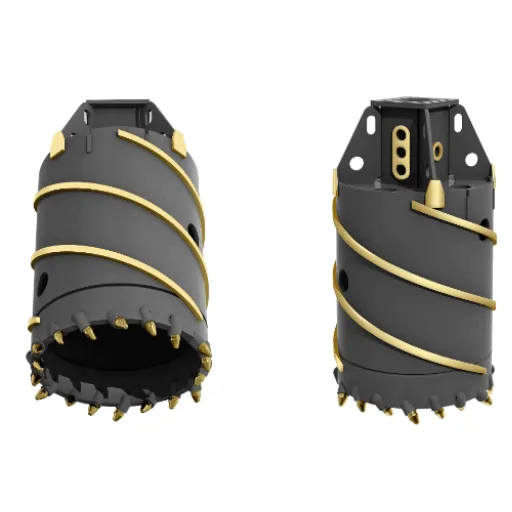
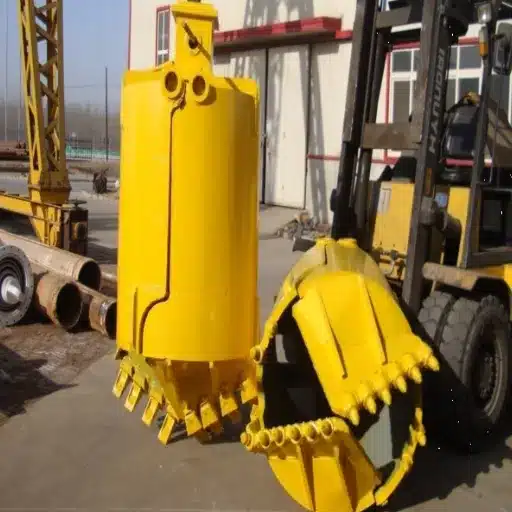
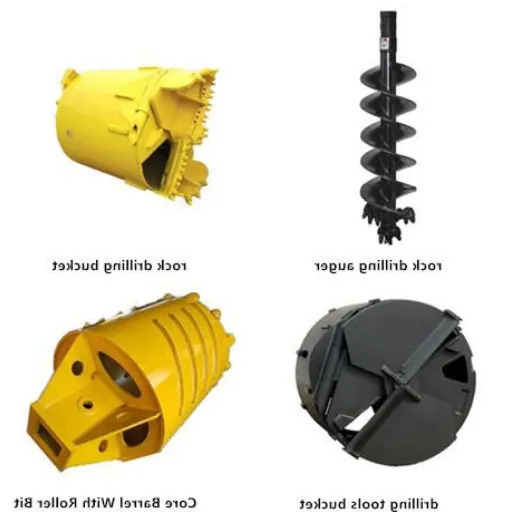
A drilling bucket is a special tool used in the construction and geotechnical industries for excavation tasks, mainly within pile foundation and deep drilling projects. It is built for rotary drilling rigs and includes a cylindrical structure that has a cutting edge and can collect soil or debris within. Drilling buckets are supposed to break hard soil, clay or rock formations and without them, it would be impossible to drill stable boreholes in difficult underground conditions. By energizing the cutting tools at the bottom of the bucket to dislodge the material, drilling buckets are operating while the internal chamber is accumulating the cuttings. Drilling buckets come in various forms to cater to distinct applications, such as rock buckets equipped with heavy-duty teeth or clay buckets that are perfect for cohesive soils, which means that drilling buckets can function in a variety of geological settings.
Overview of the Drill Master Bit Set
The Drill Master Bit Set is intentionally fabricated to cover the various needs of today’s drilling operations. High-quality materials are used in the manufacturing of each bit in the set, their life and operation are being pushed to the limits under extreme conditions of stress, and yet they will still give the best performance. Bit designs in the set are diversified, being for example, pilot bits for precision start, core bits for material extraction, flat-bottomed bits for stability during complex drilling operations. Other bill bits are then coated with a protective film to reduce wear, thus extending their life cycle through the damage that might be caused by some mined materials.
The drill bits have been engineered to blend in well with the industry’sminedrill rigs and, thus, provide a wide range of compatibility for different projects, starting from civil engineering to oil drilling. Moreover, the incorporation of new features such as self-centring tips, optimized cutting angles, and debris-clearance channels, besides that, guarantees productivity and precision, and if it weren’t for them, the overall drilling process would improve considerably. Such a mix of robustness, adaptability, and accuracy is what makes the Drill Master Bit Set so valuable to professionals as they will never be reluctant to replace it with another because they can be sure that they have a handy and essential tool which they love to use because of its performance.
Key Features of the Drill Master Bucket Auger
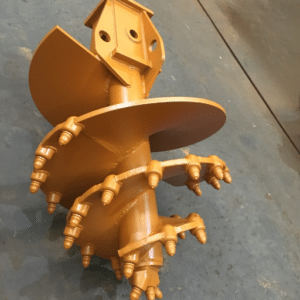
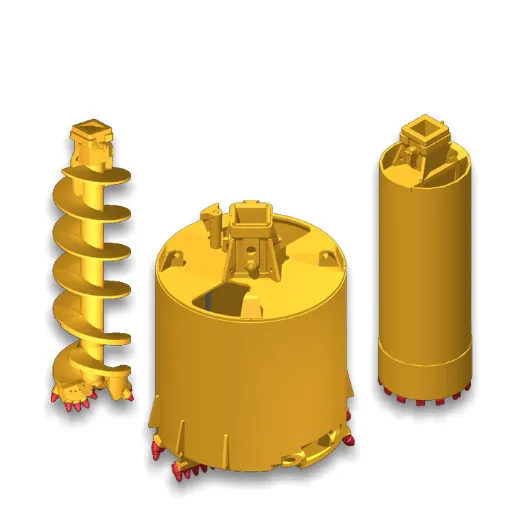
The Bucket Auger of Drill Master has been designed for the toughest of drilling operations commonly seen in modern times. The auger is made up of high-tensile steel, which makes it extremely durable and capable of a long service life even under the hardest of conditions such as abrasion and impact. The auger’s cutting edge is not only reinforced but is also being made with precision in order to guarantee good sharpness and performance consistency in the different types of soil which include clay, sand, and gravel. Moreover, its spiral blade design simplifies the removal of the material and the material removal being faster and less of an issue to the operator, making it one of the best choices for long hours of operation.
The auger comes equipped with teeth that can be interchanged. Its replacement is quite simple and once done, the operational life is further extended. To prevent rust and environmental degradation, a coating that is resistant to corrosion is used, and that keeps the job going in the harshest outdoor setting. In order to give it multiple applications, the Drill Master Bucket Auger has the flexibility to be mounted onto several systems thus making it very appropriate for a wide range of applications including geotechnical sampling, foundation drilling, and environmental investigations. The design of the product is optimized for performance and ease of use, being the ultimate tool for those professionals who emphasize precision in their work and at the same time are very efficient.
Types of Drilling Buckets and Their Uses
Bottom excavating buckets and their ability
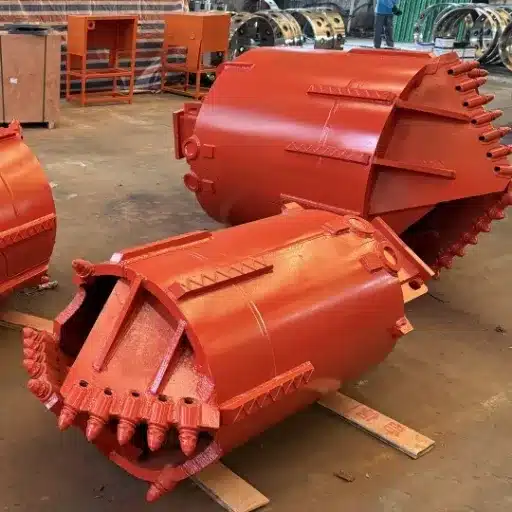
Bottom excavating buckets are constructed with the aim of being utilized to loosen and partially cohesive huge soils, as well as some soft rock formations. This fact leads to the decrease or prevention of the losses that might happen while the excavation operation is carried out. The companies that produce drilling tools like the above are aware of the demand for highly reliable and efficient products that provide the maximum comfort and safety to the user. They thus offer products that are of the highest quality and standards. The resistance of the soil being drilled is reduced to a significant extent on account of the higher penetration rates of the tools with such sharpness and unusual large diameter.
These pails were perfect for the tasks that would need high efficiency, like the foundation piling and infrastructure where it calls for precision and speed. The modern days of wear-resistant materials and manufacturing technology have given so much to the durable life and, as a result, operational times of the bottom drilling buckets have been prolonged. Additionally, the buckets’ revamped soil-retaining function enables very convenient and accurate drilling leading to the less likely material spillage and equipment downtime in the future.
Rock Drilling Buckets: Design and Functionality
The rock drilling buckets are tools that imbibe astounding technical engineering to deliver the best possible performance even in geologically very challenging scenarios. These tools are special also in terms of their structural robustness as they are made of very strong steel. This in itself adds to the high resistance to wear and deformation in the scenario where the buckets are used for operations in densely compacted or in the aggregates of abrasive rock formations. By the way, to mention one more thing, these buckets’ design is such that the cutting teeth and the carbide teeth are not only there but deployed perfectly for the highest possible penetration of the hard rock layers where the rock drill is intended for.
Rock drilling buckets are built in such a way that they are functionally designed to be able to retain soil and debris through the means of advanced systems like hinged flaps or vented bottom plates, ensuring that the excavated material is transported with minimal loss. Apart from this, the built-in wear plates and replaceable edges come to be a cost-effective pair with their service life enhancement. The use of high-precision elements goes as far as optimizing torque transmitters and, thus, making the systems capable of suffering stress quietly and, hence, not letting the extraction from being smooth and in line with the operational requirements. It is for this very reason that the rock drilling buckets are a must-have machinery for the contractors working in places which are considered to be very much demanding geologically. They would have to be the ones in need of the highest accuracy and the most durability and being very efficient is an additional requirement to project success.
Variety Choices For Multiple Usage Areas
The rock drilling buckets are planned in such a way that they can fulfill a wide range of operational needs by offering a series of customizable choices. The variations in bucket diameter, cutting edge configurations, and tooth arrangements are parts of these choices that contractors can take advantage of in order to adapt the equipment to the specific geological conditions and excavation requirements. Moreover, the latest generation of materials, including wear-resistant alloy steels, can be also used to reinforce the component and make it work properly in the harsh abrasive work environments. Besides that, there are still a number of features that can be added like an auger adapter, a debris management airflow system, and cutting bits that can be replaced to further improve the efficiency of the system for the specific project needs. Such a cutting-edge solution and the like mean that rock drilling buckets meet the most challenging of application requirements, starting from very rugged and hard rock formations all the way down to very soft soil, and there is no doubt that they are still the irreplaceable tools in the process of carrying out modern drilling operations!
Typical Applications of the Drill Master Bit Set
Foundation Drilling: Techniques and Tools
To maintain the operation and serviceability of your Drill Master bit set, it is absolutely necessary to carry out the cleaning and storing steps conscientiously. When you are done with a task, remove all the particles, dust, and residues from the drill bit meticulously by using a soft dry fabric or nylon brush that does not let particles build up which might affect the performance. If the residue stays after using these mattes, apply a little mild cleaning solution or a non-corrosive lubricant avoiding introducing too much water.
Make sure that all the bits are completely dry once you finish cleaning them so that they don’t rust or corrode. Always keep the drill bits in a box which is specially for them and protects them; this will ensure that your equipment will not only be easier to find but will also be shielded against impacts and different weather conditions. To be more secure in storing them for a long time, add a thinnest layer of machine oil to the bits to lessen the possibility of rust. The right practices of maintenance do not only contribute to the durability of your instruments but also to the accuracy and efficiency in their use at a later date.
Using Drill Master for Utility Installation
The Drill Master system has been considered to have the most successful and reliable method for the installation of utility systems. It takes advantage of high-level engineering and the best possible control. The end results are faster and more efficient drilling from site to site with less disruption and less possibility of any heat in the ground in urban and suburban areas. Even through different soils, the Drill Master always drills very efficiently. It also offers the operator automatic feedback and the drill can itself change drilling parameters such as rotary speed and pace of the drill while continuous drilling to match the conditions of different types of soils. One more of the keys to this tool’s adaptability is a design that is made of independent parts and hence allows for a variety of changes and modifications to be made to it. The design is also simple that the developers and the utility users (water or electricity) can easily modify the tool to suit their work. Digging, leveling, tunneling, compacting, and all kinds of other works can be done with this device, due to its versatility. As a utility company, installing this device can guarantee faster and cheaper operations, and more correct applications.
Environmental Issues Related to Soil and Sediment Drilling
While drilling soil and sediment, the environmental factors will determine the sustainability and the long-term outcomes of the operation hence play a key role. Drilling can change the habitats, soil properties and ground water quality, so sticking to the environmental standards is very important. It is possible to manage to some extent harmful effects by using biodegradable drilling fluids, keeping the site as intact as possible and applying waste management strategies that work efficiently. Last but not least drilling technology has introduced measuring and monitoring of the environmental situation so nothing is left to chance when it comes to the environment. Modern drilling technologies come with instruments that can provide real-time data on the environmental impacts, thus adding a new layer of responsibility and accountability to the operators. The shift to cleaner energy and the agenda for a greener ecosystem shows that the need for industries and the environment to tell a good story is getting stronger and stronger, and drilling capital is not being thought of as fully invested until and unless the hole has been punched into the ground in an eco-friendly manner.
Maintenance and Care for Your Drill Master Bit Set
Cleaning and Storing Your Drilling Equipment
Cleaning and storing your Drill Master bit set well is the highest priority to keep it up and running optimally for years. Following a proper schedule for cleaning and storage is critical. Be very delicate with this; you should be using a soft, dry cloth or a nylon brush to take out any dirt, dust, or residuum from the drill bits after every use. This step is necessary to prevent the accumulation of material that may lead to a decrease in performance. If the material is stuck on hard to the bit, a little harder method like using a mild cleaning solution or a non-corrosive lubricant can be applied, but at the same time, care should be taken not to use too much moisture.
Furthermore, as soon as you finish cleaning the bits, make it a point of ensuring the bits are properly and completely dry so as to avoid them rusting or being subjected to corrosion. Meanwhile, make your life easier by keeping the drill bits in their respective protective case thus maintaining a clutter-free and organized equipment. Remember that the case is not just about organization; it also works as a shock absorber and a protector of the bits from the environment. For the bits to retain their quality even if they are not used for a long time, it will be wise to put a very little amount of machine oil on them, as it will help keep off the oxidation. Regular maintenance will not only prolong the life of your tools, but it will also make them more precise and effective in their performance for future readings.
Common Issues and Troubleshooting
The performance and duration of drill bits can be affected by certain issues when using them. Recognizing and finding out the right remedies to these cases are crucial for the smooth performance of these tools.
Dull Drill Bits: Dull drill bits make their use less efficient and precise in drilling processes. The usual reason for this is the very extensive use or incorrect handling. The solution is to either sharpen the drill bits by the help of a specific grinding tool or to replace them in the situation of non-effectiveness of the sharpening. There will also be a significant lengthening of the sharpness by ensuring proper cooling during use.
Overheating: Overheating comes from excessive friction generating heat, this might not only ruin the drill bit but also the thing being drilled. Making it less of a problem, it is suggested to apply the right cutting speeds, and use coolant such as cutting oil, especially in working with metal. Also, allow nonstop boring to reduce heat buildup during drilling.
Material Chipping or Cracking:The workpiece experiences chipping or cracking due to the wrong drilling speed, very high force, and inappropriate drill bit for the material. Drill bits should always be paired with the type of material (e.g., masonry bits for concrete, wood bits for lumber) and also the use of a steady, moderate pressure.
Drill Bit Breakage:When breaking, the bit would most likely break in case of side loading, over-torquing, or using the bad type of bit. The user should avoid the side force, and the bit with the selected diameter and the hardness of the material that is consistent with the task should be chosen.
Slipping in the Chuck:The problem of drill bits slipping in the chuck can cause uneven drilling and might result in potential damage. The person in charge should secure the chuck with a tight grip, making sure it is aligned correctly, and at the same time, checking that the shank is free from oil and debris. Additionally, but not preferably, a high-quality chuck can eliminate slipping as well.
Users can optimize their drill bit maintenance through the correct application of techniques, tools, and maintenance that can minimize operational downtime while increasing the efficiency and longevity of the bits.
Extending the Life of Your Drilling Tools
To ensure longer life for mining tools, the users must focus on proper storage and handling practices as the key to avoid early wear and damage. Drilling tools must always be stored in a clean and dry place so as to be protected against moisture that may cause corrosion. Think about using protective cases or tool wraps to lessen the chances of dust and contaminants contaminating them. Concerning transport, be sure to keep tools secured to avoid impacts or vibrations that are not necessary and which can cause a weakening of the structures or a misalignment
If you are using the tools, do not drop them or force them to do things they are not meant to do. It is for example enough to use a drill bit on materials which are not suitable for it that it can then chip or the cutting edge will rapidly going blunt. When you inspect your tools regularly and fix them it makes them last longer, perform better and be more durable. Paying this much detailed attention would not just be for the good of your operational efficiency and a reduction of costs from the frequent tool replacements but the gains could also be significant in both areas.
Maximizing Efficiency with the Drill Master Bit Set
Final Verdict on Performance and Adaptation
In my view, the Drill Master Bit Set is a highly versatile, efficient toolset designed to meet the needs of professionals and DIY enthusiasts. The ton of tasks it can do, i.e., loose tiles, replace watches, chains, and jewelry, etc., is the main and very impressive feature of this set. The high quality of the bits is very helpful because there will be a lot of users using them, but at the end, there is no need to worry about the set’s life expectancy as they are made out of very durable materials.
The part responsible for user comfort is the most valuable one for me. The whole set is usually put into a very well arranged and portable box, that makes it easy to handle and lessens the time when you have to wait for the bit. Moreover, different sizes and types of bits in the set make the transition from one project to another very smooth thus boosting productivity. Eventually, the value of the set is captured when the above is combined with the proper maintenance practices like the user being meticulous in cleaning the tools and not using the set beyond its designed maximum. The tool long-lasting feature is the consistent predominated contribution of the set in addition to reduced wear-related defects.
To sum it up, I reckon that the Drill Master Bit Set is the most solid and efficient tool to go for when a user looks forward to obtaining the desired class of output in applications of a wide range. The fact that it can last long also give its precision and versatility, which turn it into a tool that you will always carry along with you so that you can reduce your team working time and maximise the results. The positive side of the tool is that it is the one that’s going to produce the business advantages which are also the reason for which these technologies are the most sought-after ones amongst the others that are dealing with more or less the same issues.
Different Kinds of Drilling Operations
To sum up, based on my personal experience, working with advanced drilling techniques can substantially improve the efficiency and the accuracy of your work. Among such methods step and peck drilling are very useful in different types of materials with different levels of hardness or in quest for the top quality of the final product. For instance, step drilling is an efficient procedure because it reduces the force on the tool step by step while the hole is getting bigger, producing clean holes with less heat. Besides this, Peck drilling stands out with its excellent chip removal and less tool breakage risks, in particular, when drilling deep holes. The result will be not only the prolongation of the drill bit’s life but also of a better-quality, so the technical improvement in practice is worth doing.
Besides, cutting-edge technology can elevate drilling performance immensely—for instance, the potential of drill bits with special coatings, like titanium nitride (TiN) or cobalt-based alloys. Coatings will do the work by limiting friction, providing heat resistance, and making the whole process of drilling even in hard materials like stainless steel or titanium as smooth as possible. The employing of drilling guides or jibs will further help by making every cut correctly aligned hence people will deal with less post-processing related work, or even far lesser, and it will also contribute to the elimination of the problem of errors at the expense of additional adjustment operations. Using these advanced methods along with the traditional but proven ones also, I observed that not only can the results be better but might the whole process also be more efficient by saving time and resources (optimized workflow).
Consistent education and practice are the core components of being conversant in complicated drilling methods. Well performed studies and innovations have been set as a stage for modern drilling tool and methodology breakthroughs and they’ve been able to transform these venues for specialty of professional people like us. My advice is to fully immerse yourself in the exploration of the newly introduced techniques so that you are both skillful and highly effective in the projects you are doing.
Learning Tools and Techniques.toList of Drilling Equipment
The best combination, as far as the matter of staying informed about the latest drilling equipment developments is concerned, is the intermingling of information from dependable industry sources with practical experience. It is an immediate requirement to look for some authoritative pieces of writing like the ones found in industry journals, papers of technical nature, and case studies to study. Websites such as the International Association of Drilling Contractors (IADC) and the Society of Petroleum Engineers (SPE) regularly come up with useful and up-to-date information in terms of technicalities, safety, and trends of the most recent drilling tools and methods.
These platforms not only provide webinars, white papers, and industry news but also do so in a very engaging manner, which is almost the only option for those who desire to be the first to acquire the further information.
Moreover, I also advise the use of official training courses from top providers, a lot of which are based on the manufacturers themselves or specialized organizations within the industry. Schlumberger, Halliburton, and NOV, among others, provide customers with complete product information and training programs that show how their latest technologies have been used in practice. Apart from that, Coursera or Udemy and other online sources are also there to offer classes on drilling mechanics, equipment optimization, and maintenance protocols that range from the simplest to the most complicated ones. The combination of class work that is full of thought with the performance of work experience would come up with a great understanding of the old and new equipment and technologies.
Sometimes, nothing beats getting your hands dirty and actually working with the machinery to get the hang of it. My advice is, look into attending showrooms, trade fairs, and field training courses, like the Offshore Technology Conference (OTC), where visitors can not only view but also feel and ask about the latest machines and technologies. The experience generally unconnectable in case of reading about it, is quite often the outcome when mingling with old hands (veterans) during such activities. The combined selection from these—your research, attending schools, and getting first-hand knowledge—results in the most effective route for global capability in drilling equipment mastery.
Reference Sources
Bit selection using field drilling data and mathematical investigation – Focuses on bit selection and optimization using field data and mathematical models.
Optimum bit selection and operation for the rotary blasthole drilling – Discusses bit selection and operations for rotary drilling in surface mining.
Development of a specially designed drill bit for down-the-hole air hammer – Explores the design of drill bits to reduce dust production during drilling.
Techniques of pilot-scale drilling research – Describes experimental methods for micro-bit drilling research.
Drilling for water: a practical manual – A comprehensive guide on drilling techniques, including overcoming common challenges.
Frequently Asked Questions (FAQs)
What are the ways to maintain a drilling bucket on a drill rig machine?
To keep a drilling bucket in working order and to be able to operate the rig and the kelly bar assembly longer, frequent inspection is a must. TEars, and the cutting edge should be thoroughly checked and steel body inspected for any cracks, while the contact surfaces and seal mechanisms must be sealed and in good order to avoid any borehole contamination. Items should be seasoned but moving parts should be adequately serviced and the hydraulic actuating system of the tackle and bucket should be inspected and tested if the flow is correct, pressure is adequate, and the valve system operates smoothly. Teeth that are worn out should be replaced, and bolts should be re-tuned if the size of the hole is not up to the drilling standard, especially in the case of large-diameter boreholes. Effective maintenance leads to minimized operational downtime, higher safety levels, better soil quality in foundation drilling and piling work.
What is the best size of auger and drilling bucket for foundation and piling work?
The choice of the right size of the bucket largely depends on the planned pile diameter, the soil type, and the requirements of the casing for the base. Buckets are available in sizes ranging from small-diameter units for superficial wells to large-diameter conical designs for deep well drilling and borehole construction, and the choice must be compatible with the drill rig and kelly bar capacity. One must take care of the borehole wall stability, possibly there may exist gravel and aquifer layers, and by the way, also consider whether casing or temporary pipe have to be used to strengthen the hole’s top. Material strength and manufacture standards are instrumental in influencing the durability of the buckets under very hard cutting conditions and abrasive soil. The durability of the product can be assessed by the margin between the selection and the machine power and torque, so as not to stop the machine or worn-out the product excessively.
Can a rock drilling bucket be used for soil and sediment removal in rotary drilling?
Of course, specifically engineered for heavy duty rock drilling, another type of excavator attachment like drilling buckets can also be used for tougher ground, and when there are densely compacted gravels around, but the rate of production can be completely different depending on the material and tooth configuration. If the predominant material is soil and sediments, the best choice would be a bucket with the biggest openings along with the appropriate tooth pattern to prevent any clogging of the pipe or casing during the cleaning and spoiling operation, and also so as to convey the material property and percentage in an efficient manner. In the rotary drilling process, the system should produce as well as cut the material in a balanced manner and feed the bucket or the auger according to the borehole wall conditions. The use of a bucket for a given type of material and hole size keeps the size of the removal constant and so the need for reaming is reduced. To the controlled areas of the aquifer, a reasonable amount of sediment flow and cut should be allowed along the path so that the contamination can be limited to an extent and both the well and the worker are saved from harm.
How does tooth design impact the Biomass-Mineral Particles Interactions in Flow Rates through a Ring Cork Dust Piston Pump?
Tooth geometry and placement are paramount in the penetration of hard rocks and at the same time, the cuts being done are fast and the formations irregular. The conical tooth design that focuses the breaking force at the point of the rock while at the same time having the bucket body friction pulled, a material tough for penetration is the result. Besides, the life of the tooth will also be extended. In the case of abrasive ones, particularly hard steel teeth, and the modular system of teeth are highly resilient, which, on one hand, as to their being replaced in the teeth; also, they keep the diameter of the borehole the same. Not only the teeth have to be selected properly but also this affects spoil fragmentation and its flow up the pipe; the teeth that are inefficient usually cut too big the clogging up of the drill rig circulation may be implied. On the other hand, frequent inspection of tooth wear and matching of tooth types with the hardness of the rock are the marks by which the productivity is maximized and the cumulative damage to the kelly and tackle is diminished the most.
What are the well and casing installation areas whereby hydraulic drilling buckets are most commonly used?
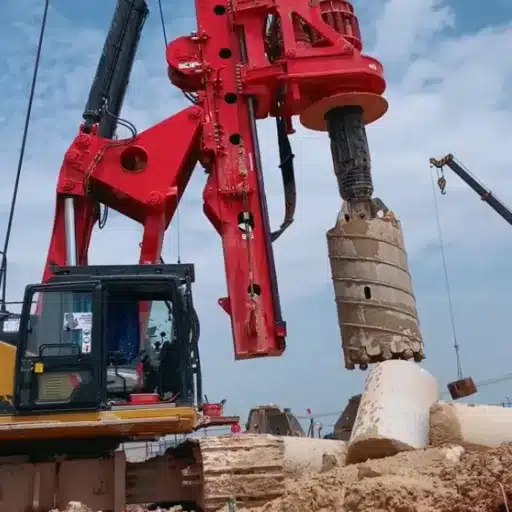
Hydraulic drilling buckets have a broad range of usage in well construction, casing installation, and foundation drilling – places where cuttings are needed to be removed and conveyed in a controlled manner. The hydraulic system makes it possible for the bucket to be precisely opened and closed, hence it is easier to lower the casing and to control the spoil flow even while extracting, a task that is very important as regards to the integrity of the borehole wall. These buckets are adaptable to the various drill rigs and can be used for soft soil, dense gravel, and rocky material too. The right connection with the hydraulic flow of the rig and a proper kelly bar lead to a reliable operation and ensure the safe lifting of the load. In areas where the wells are close to the aquifers, the hydraulic system ensures the management of cuttings and reduces the chance of contamination.
What steps do you take to select a versatile drilling bucket design for the large-diameter boreholes and foundation drilling?
The process of selecting a customizable bucket for a project is initiated by assessing the sizes of the hole (for diameter and depth) and the condition of the ground including soil, for example, the presence of gravel, cobbles, or bedrock. With a custom-made bucket, you can dictate tooth type, steel grade, opening size, and such add-ons as casing adapters or conical cutting faces for the case of unstable wall conditions. One should be mindful of the bucket’s physical compatibility with the drill rig’s maximum torque and hydraulic power that makes the mechanism less likely to be overloaded resulting in efficient cut removal. Moreover, it is greatly recommended to take into account the manufacturers’ standards, quality control, and the availability of spare parts like kelly bar adapters and teeth to ensure greater uptime. Picking the right bucket, which is customizable, helps in enhancing the cut’s efficacy, decreasing the friction with the borehole wall, and supporting a safer and more reliable foundation drilling process.