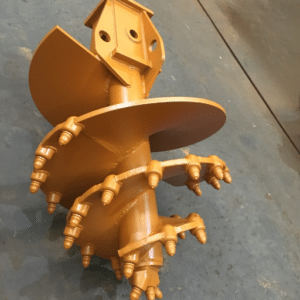
Drilling through hard ground is one of the most demanding challenges in construction and excavation projects. However, developing advanced auger teeth has been a real breakthrough for efficiency and durability in the field. The harsh conditions have become easier for the advanced auger teeth to survive and perform efficiently. This article takes a closer look at the latest high-performance auger teeth technology that has been developed to fight difficult terrains. The innovations range from the most advanced materials to the highest wear resistance and the most efficient designs, and we will discuss how these were and are still graduated far beyond the limits of excavation breadths. Trying to improve project performance or to get a hold of the latest industry trends is what the article ambiguously says, the latter being the main point, this article is the ultimate next step in acknowledging that auger teeth innovation is totally changing operation in rough ground and indeed one of the very few resources dedicated to the topic.
Understanding Auger Teeth and Their Applications
What are Auger Teeth?
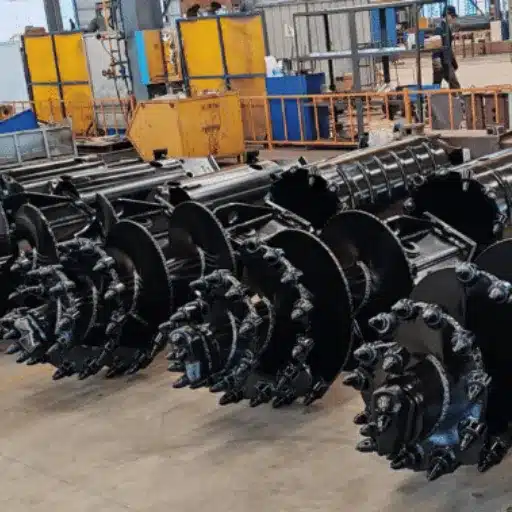
Auger teeth are the hardened, custom-made metal blades that are fixed to augers. They are also high performance drilling tools made specifically for the purpose of earth boring. The teeth are usually made of high tensile strength materials like tungsten carbide or hardened steel. They are also designed to undergo a considerable amount of stress and wear when used during drilling. Their main goal is to crush the soil, rock or any type of subterranean matter and let through past the auger, benefiting the borehole situation. Auger teeth, because of their capability to manage a wide range of ground conditions, from soft soils to highly compacted or rocky terrains, are widely used in the construction, mining, and agriculture industries. Their design is usually made to have the required tooth geometry to be very precise and modern coatings to strengthen the cutting performance, the durability, and the efficiency during operation. This has made them a critical part of the modern earth drilling equipment.
Different Types of Auger Teeth for Various Grounds
Auger teeth choice is the main thing to do for the improvement of performances and efficiency in operations in all types of soils. For the soil types like soft and clay, flat or cup-shaped auger teeth are the most widely used and the reason is they can scoop and displace the material with very low friction. The teeth are usually made of wear-resistant steel and are-iffed in such a way that they do not let it clog up, in which case drilling would be smooth.
For medium-density soils and mixed materials, bullet-shaped or tapered teeth are the ones that the operators like to go, i.e they are the favorites. These teeth match cutting precision with durability and are capable of cutting moderate obstructions such as small rocks or compacted sediments. They often have tungsten carbide tips that offer superb wear resistance and the teeth stay sharp for a long time, making them a good choice.
What it comes to hard, well-cemented soils or rocky terrains, the ultimate need remains the use of tough carbide auger teeth. Such teeth, either with conical or chisel shapes, are made to be as penetrating as possible in various material grounds, which have very high density, and at the same time, reinforced to withstand tremendous strains and impact drillings. Their hard-built makes sure the extended lifetime and trouble-free work under the hardest of conditions.
The auger teeth must be chosen according to the requirements of the project, as the wrong ones may result in lower efficiency, heavier wear and tear, and possible machine damage. The proper use of auger teeth and, in this case, the knowledge of the ground conditions along with the technology available and possible for the corresponding tooth design is the major factor in the case of fieldwork and the vertical type involving drilling.
Applications of Auger Teeth in Heavy-Duty Environments
Auger teeth have a great influence on tough conditions and are mainly used in big development, mining and soil technology sectors. These pieces are of great help in soil excavation, foundation drilling, and tunneling, and similar to the situation in construction, the basic truth is that auger teeth are must-haves in the creation of deep and firm foundations, especially in the case of challenging terrains like, for example, clay, gravel, or rocky substrates, where accuracy is required. Besides, in the mining processes, they are of great use as they allow for the maximum extraction of the material in a way that is less labor-intensive and more secure by keeping the elements that might wear them down away and ensuring their services are constant throughout.
Specialized auger teeth for particular ground conditions have been made nowadays also possible by advanced technologies. A good example of this is the implementation of the carbide tip technology where teeth are made resistant to erosion, thus becoming more effective in the cutting process for hard rock. Thus, wearing and tearing off problems would quite often mean not replacing the teeth for a very long time and also there would be less maintenance work. The augmentation in the versatility of the teeth design has been another main advantage resulting from the interchangeability of the teeth thus permitting the operators to make a specific project shift without stopping the work and incurring business loss. Incorporation of strong materials and accuracy in designing guarantees that the teeth, which are incorporated into the auger, are capable of bearing heavy mechanical loads and, through this, efficiency and life in the end are improved within the areas of very high loads and harsh conditions.
Design Innovations in Auger Bits for Hard Ground
Latest Technologies in Auger Bit Design
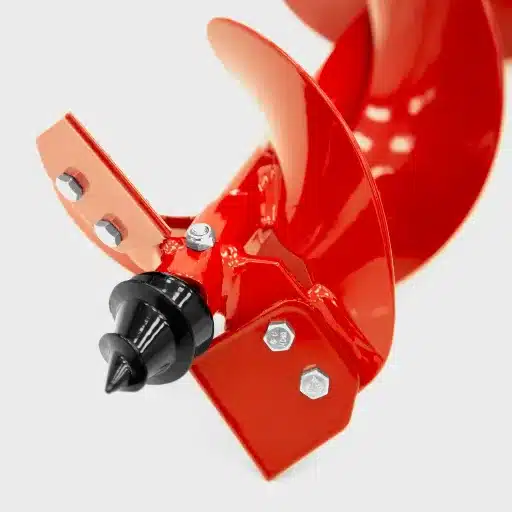
Auger bit design developments are now laser-focused on the creation of the most advanced yet durable materials and be top notched at the same time through the application of the most modern production processes. The requirements of drilling under harsh conditions like hard rock or gravelly earth can well be met with these design innovations. The hard and wear-resistant tungsten carbide cutting edges are a common feature of the new auger bit in the form of modern augers, which contributes a lot to the cutting effectiveness and durability improvement. The precision manufacture and laser-guided processing of the bits also make the edges always in the right position and balanced, therefore, greatly reducing the vibration during use and increasing the service life of the tool and the machine itself through the process of operation shake reduction.
One more highly-important step is the use of cutting teeth systems that can be substituted. By using these modular designs, the maintenance is so efficient and also it is possible to make changes for a specific project by the operators changing the teeth. Consequently, the existing equipment is continuously kept working, because the time of stopping the operation is minimized. Moreover, they also apply very modern coatings like titanium nitride or diamond-like carbon (DLC) to the cutting teeth, which results in the enormous increase of surface area hardness and, hence, reduced friction and losses in the drilling process, meaning the drilling performance and energy consumption are maintained at the same level.
The latest technology is starting to have an impact on the design of auger bits. In this early stage, some models already have sensors implanted in them. These sensors are able to monitor torque, temperature, and wear patterns in real-time. From this data a prediction of maintenance schedule is possible. This technology is similar to that used in other industries and it helps optimize performance and prevents equipment from failing. With these scenarios combined, auger bits of today have an added appeal in terms of high efficiency, adaptability, and long service life when used in tough and precision drilling tasks.
Benefits of Advanced Auger Teeth Designs
Given their use of high‐grade tungsten carbide and alloy steel materials, the teeth can withstand wear in a manner that is one-hundred times better than when using standard steel. This and other operational benefits that come with the newly designed teeth contribute to the increased demand for these products.
Theaugerbitsinusethesedaysnotonlyhave capabilitiesofsharpening themselves,but alsosharpening can prolong their life,to the extent that they even out the amount of downtime which comes with frequent replacements. Moreover, the erections of modular designs make it easier and less complicated to change one tooth at a time without disintegrating the whole auger assembly, thus, boosting maintenance efficiency. In addition, the use of wear indicators allows operators to have immediate access to the situation of the teeth, thereby giving them the chance to plan for the proactive replacement of the teeth thus minimizing any operational delays that might occur.
Aabstract from the text:ɣ] Traditional vs. Innovative Auger Bits
In comparing the old-fashioned auger bits and their innovative alternatives, very obvious differences come out, particularly in the areas of design, performance, and maintenance requirements. Older auger bits more often than not have simple, fixed-tooth designs that are not very adaptable to different soil and rock conditions, which, in turn, causes greater wear rates and a lot of downtime either for repair or replacement. Moreover, the traditional designs that do not integrate the sophisticated wear-monitoring systems result in the operators having more difficulty in seeing the maintenance needs and consequently, in issues like the machine fails unexpectedly and the project is disrupted.
Auger bits that are and advanced in terms of materials and design are also different from the traditional ones in the sense that they are made of cutting-edge materials and have modular designs that make the auger bits more durable and performing better. This can be seen, for example, in advanced tungsten carbide coatings that are applied to the cutting edges, largely increasing the resistance of the cutting edges to abrasion and impact when working under tough conditions. Other big and attractive ones would be replaceable teeth and integrated wear indicators that would make maintenance easy, extend the overall life, and optimize the operational uptime. Moreover, innovative auger bits are much more likely to be designed with precision of geometry to reduce the consumption of equipment as well as fuel, thus making them more energy-efficient.
While the traditional auger bits might be still valid for lower-cost, small-scale operations, the technology progress in the innovative design undeniably positions them as the choice for large-scale, high-efficiency drilling jobs where reliability and cost-efficiency are the order of the day.
Performance of Auger Teeth in Challenging Conditions
Latest Technologies in Auger Bit Design
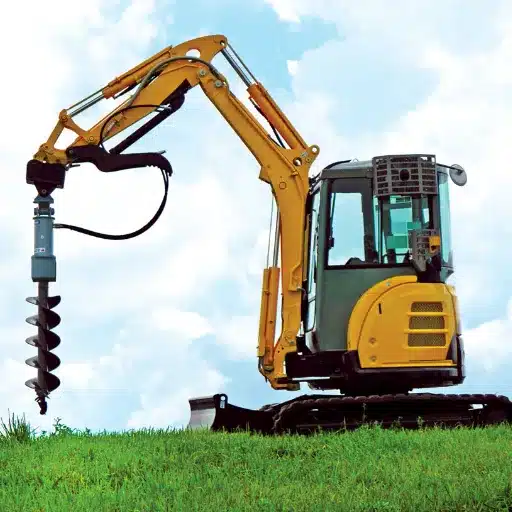
Auger bit design developments are now laser-focused on the creation of the most advanced yet durable materials and be top notched at the same time through the application of the most modern production processes. The requirements of drilling under harsh conditions like hard rock or gravelly earth can well be met with these design innovations. The hard and wear-resistant tungsten carbide cutting edges are a common feature of the new auger bit in the form of modern augers, which contributes a lot to the cutting effectiveness and durability improvement. The precision manufacture and laser-guided processing of the bits also make the edges always in the right position and balanced, therefore, greatly reducing the vibration during use and increasing the service life of the tool and the machine itself through the process of operation shake reduction.
One more highly-important step is the use of cutting teeth systems that can be substituted. By using these modular designs, the maintenance is so efficient and also it is possible to make changes for a specific project by the operators changing the teeth. Consequently, the existing equipment is continuously kept working, because the time of stopping the operation is minimized. Moreover, they also apply very modern coatings like titanium nitride or diamond-like carbon (DLC) to the cutting teeth, which results in the enormous increase of surface area hardness and, hence, reduced friction and losses in the drilling process, meaning the drilling performance and energy consumption are maintained at the same level.
The latest technology is starting to have an impact on the design of auger bits. In this early stage, some models already have sensors implanted in them. These sensors are able to monitor torque, temperature, and wear patterns in real-time. From this data a prediction of maintenance schedule is possible. This technology is similar to that used in other industries and it helps optimize performance and prevents equipment from failing. With these scenarios combined, auger bits of today have an added appeal in terms of high efficiency, adaptability, and long service life when used in tough and precision drilling tasks.
Benefits of Advanced Auger Teeth Designs
Given their use of high‐grade tungsten carbide and alloy steel materials, the teeth can withstand wear in a manner that is one-hundred times better than when using standard steel. This and other operational benefits that come with the newly designed teeth contribute to the increased demand for these products.
Theaugerbitsinusethesedaysnotonlyhave capabilitiesofsharpening themselves,but alsosharpening can prolong their life,to the extent that they even out the amount of downtime which comes with frequent replacements. Moreover, the erections of modular designs make it easier and less complicated to change one tooth at a time without disintegrating the whole auger assembly, thus, boosting maintenance efficiency. In addition, the use of wear indicators allows operators to have immediate access to the situation of the teeth, thereby giving them the chance to plan for the proactive replacement of the teeth thus minimizing any operational delays that might occur.
Aabstract from the text:ɣ] Traditional vs. Innovative Auger Bits
In comparing the old-fashioned auger bits and their innovative alternatives, very obvious differences come out, particularly in the areas of design, performance, and maintenance requirements. Older auger bits more often than not have simple, fixed-tooth designs that are not very adaptable to different soil and rock conditions, which, in turn, causes greater wear rates and a lot of downtime either for repair or replacement. Moreover, the traditional designs that do not integrate the sophisticated wear-monitoring systems result in the operators having more difficulty in seeing the maintenance needs and consequently, in issues like the machine fails unexpectedly and the project is disrupted.
Auger bits that are and advanced in terms of materials and design are also different from the traditional ones in the sense that they are made of cutting-edge materials and have modular designs that make the auger bits more durable and performing better. This can be seen, for example, in advanced tungsten carbide coatings that are applied to the cutting edges, largely increasing the resistance of the cutting edges to abrasion and impact when working under tough conditions. Other big and attractive ones would be replaceable teeth and integrated wear indicators that would make maintenance easy, extend the overall life, and optimize the operational uptime. Moreover, innovative auger bits are much more likely to be designed with precision of geometry to reduce the consumption of equipment as well as fuel, thus making them more energy-efficient.
While the traditional auger bits might be still valid for lower-cost, small-scale operations, the technology progress in the innovative design undeniably positions them as the choice for large-scale, high-efficiency drilling jobs where reliability and cost-efficiency are the order of the day.
Replacement Options for Auger Teeth and Bits
When to Replace Your Auger Teeth
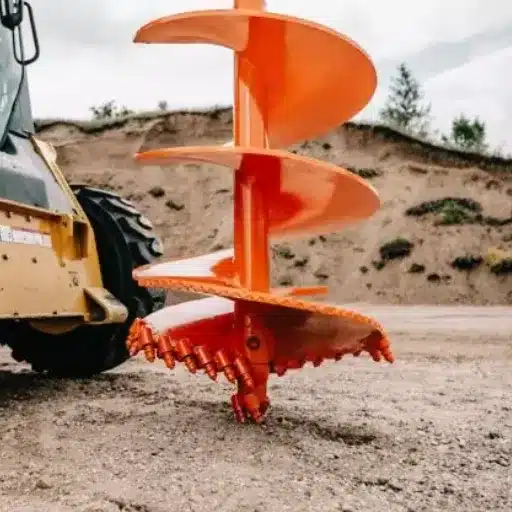
Knowing the right time to replace your auger teeth can really make a difference in maintaining your equipment’s optimum performance and preventing excessive wearing. Losing the ability to dig, seeing the cutting edges of hardware being worn out, and detecting different vibrations during the operating process are signals that replacement might be needed. So you need to exert constant vigilance particularly in the case when cracks are seen, edges become round, the wear is uneven- such signs can bring about the decrease in penetration and an increase in operational strain. Quality standards in the industry are for worn teeth to be replaced by qualitatively good ones before the former can collapse the structure of the auger. The failure to carry out timely maintenance will bring about a high rate of wear in other parts of the system and subsequently shorten the life of the whole system. An early and thorough inspection of the teeth with the help of a replacement plan done in an organized and scheduled manner is the best warranty for a long life of the system even in hard working conditions.
Choosing the Right Replacement Teeth for Optimal Performance
When deciding on tooth replacements for a drill, it is crucial that one should go over multiple technical and operational factors in order to make sure that the newly installed teeth are compatible and perform with the best efficiency. The teeth material is of ultimate importance in this regard, and it has a lot to do with their longevity and resistance to abrasion. For tough applications, the use of premium quality alloys like tungsten carbide or hardened steel, is very much recommended because of the fact that they are able to resist abrasion and impact better than any other materials.
Geometric and structural aspects are also important when it comes to the choice of teeth. There are definite designs, like that of the chisel-type or the conical-type of teeth, which are specially made for conditions where the grounds are quite different, ranging from soft soils to solid rocky covers. If the design of the teeth is made to match the soil, then the cutting efficiency can be maximized, usage stress can be minimized, and the lifetime of the tooth can be extended greatly.
One should not overlook correct sizing while picking the best replacement auger teeth. Mismatched teeth in size or shape would make wear rates imbalanced and operation of the equipment unsteady, which can potentially lead to the equipment breaking. Compliance with the manufacturer’s specifications minimizes these risks as well as enables smooth operation.
Anticipate also the ease of installation and upkeep in terms of the replacement teeth’s choice. Mounting systems or quick-change mechanisms which are standardized for the teeth make downtime less and substitution of the teeth easier. If these aspects are prioritized, operators can be confident to have selected replacement teeth that would bring forth maximum productivity and longevity even under varying working conditions.
Cost Considerations for Replacement Auger Teeth
When you are calculating the price of the new auger teeth, it is a must to take into account both the original cost and the entire cost of ownership. The teeth for the auger that are known for their quality usually have a little higher price at the beginning but they last longer and require less maintenance, thus they end up being cheaper in the long run. A longer lifespan and wear resistance apparatus can very well cut the time of machine shutdown and maintenance-repair services. For the operations with indefinite processes, continuous as well as productivity are the key cost factors if they want to remain competitive and cost effective.
On top of that, it is a must for operators to scrutinize the availability of compatible replacement parts. Teeth that are not easily found may entail higher sourcing costs and lead times, especially on the outskirts or in situations where time is of the essence. A comparison of the material, for instance, tungsten carbide-tipped teeth versus the standard steel options, becomes very important in choosing the right kind that is performing well and lasting long in the specific environmental condition. It is a good option to go for the teeth that are more suitable for the particular substrates—whether clay, sand, or rock—so as to avoid wear that cut life short and to guarantee the operation efficiency leading to less fuel and labor costs vis-à-vis inefficiency. By capitalizing on the up-front cost and keeping operational efficiency at the same time, operators can be successful in getting a cost-effective solution that is customized to their auger applications.
Future Trends in Auger Technology
Emerging Materials and Their Impact on Auger Teeth
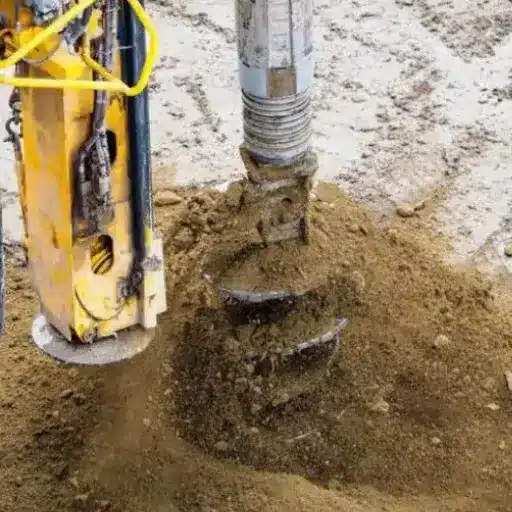
It can be seen from the research I conducted that the progress in materials technology is highly influencing the prospects of auger teeth. Advancements in materials are giving auger teeth more strength, making them last longer than before. The best thing about them like one that has added so much to their use in the industry, is that they have a very low rate when it comes to wear and also have been proved to be very hard and durable. These materials prove to be very effective even in cases where the environment is so tough that abrasion is inevitable let alone impact. In such conditions, these materials are found to last up to five times longer than those made of standard steel. Besides, the infusion of heat-treated or surface-hardened steels gives them a combination of toughness and cost-effectiveness; therefore making them one of the go-to choices in the heavy-duty applications arena.
Another thrilling innovation is represented by the adoption of nanostructured materials in the production of auger teeth. Through the modification of the material properties at the atomic scale, nanostructuring has increased both the strength and resistance to cracking or deformation when under pressure. Tungsten carbide is the material example nanostructured variants of which are being implemented with smaller grain sizes for the purpose of having a better hardness and wear resistance, hence, it would enable the drilling operation to be more accurate and to last longer in the harsh conditions.
In turn, these technologies redefine the sustainability aspects of the vertical. Companies are diversifying into materials that are either recyclable or eco-friendly, and that still have the same quality or even more. The last links of nowadays maintenance mine are coatings, such as diamond-like carbon (DLC) and ceramic-based options, which lessen friction and energy usage, prolonging the life of the machine through these measures. These innovations are a concrete proof of the direction where materials are optimizing not only performance but also cost-effectiveness and environmental responsibility, which are the main goals of the industry as a whole.
Future Advances in Auger Design
Different improvements in the future are expected to head up the auger manufacture industry driven by the technology up-grades dong and the needs of the market for greener, more efficient, and more accurate methods to fulfill the requirements. Among the top areas of the process is the union of the smart technology together with automation. The usage of the sensors that are put inside and the IoT-based devices in the auger systems will create the process of performance monitoring and code maintenance revolutionization. The operator will be able to determine the throughput by getting instant feedback on such parameters like the quantity of the material, the intensity of heat, and vibro-frequencies. They can compare this information to what they get from standard measurements and see if there are any irregularities. This way, the previous problem of identifying a cradle for the problem shall become practically nonexistent. The result is an operational paradigm where downtimes do not pose a big issue anymore and the total cost of operation is, in the end, less!
The persistence of the materials science field is also a major trend, where the refinement process is continuously being researched as a strategy to improve the auger components` durability and efficiency. In this context, the possibility of using advanced alloys and composite materials is a key factor in the attempt to enhance wear resistance, thereby, (even) under corrosive or highly abrasive conditions. For example, the application of nanostructured coatings and self-lubricating materials may not only reduce the necessity of external lubricants but also make maintenance less frequent and and the related energy use lower. Hence, these are industry-wide developments that help in the making of equipment perform better and leave a lower environmental impact at the same time.
Auger design is going to undergo a sea change in a few years, becoming dominated by advanced manufacturing techniques like 3D printing. This development will pave the way for ‘made-to-order’ augers for the industry along with the best that the geometry and the material composition of the auger would offer. Moreover, the application of AI simulations to the design process and manufacturing will allow manufacturers to emulate and optimize auger performance for a wide range of conditions. In general, the ultimate result will be that the mechanical central component of many different industries will stay up-to-date with the demanding standards and so even move forward to a new sector characterized by efficiency and flexibility, the latter being of principal importance in this case.
Environmental Factors for Auger Teeth Design
When discussing environmental aspects in developing auger teeth, I think of two main issues: material sustainability and waste reduction. To some extent, the first crucial thing is to use biodegradable or recyclable materials in the product. The latter is not true for the carbon steel treatment used by many tooth manufactures, it is a choice with such properties like durability, however, it is a environmental hazard because it is energy intensive to produce and it is difficult to recycle. I am looking into introducing new technology for another type of material or merging it with steel, and the latter one can be sourced from recycled metals. This process is aimed at not only giving a new life cycle to auger teeth but also at improving their environmental impact. Simultaneously, the use of protective layers, such as coatings, can ensure that the equipment remains in good condition, and therefore reducing the occurrence of replacements and waste.
Not only the materials but the manufacturing and the environmental impact through the product’s lifecycle are also crucial aspects of my selection. The modern manufacturing technologies (e.g., additive manufacturing, a.k.a. 3D printing) make the production smoother and cleaner allowing for exact zero-waste conditions. Additive manufacturing supports these tough green goals because it gives the opportunity to shape components directly and to eliminate the waste that is produced during cutting, drilling, and milling. To take it even further, the end-of-life recycling programs need to be included in the company’s policy of product distribution so as to make sure that the slag auger teeth will become the base to the new ones turning the lifecycle into a circle. Once these strategies become the main focus of the development process, they will not only make our industrial system more sustainable, but also meet the increasingly strict norms and the customers’ rising demand for green products. My strategy focuses on the compromise between the performance and the environment-friendliness, thus, resulting in the long-life, high efficient and, environmentally friendly next generation of auger teeth.
Reference Sources
-
Understanding Rock Auger Teeth: Types, Applications, and More – This article discusses the applications of rock auger teeth for drilling through hard ground and mixed soil.
-
Auger Teeth for Hard Ground: Durable & Efficient Solutions – A detailed overview of high-performance auger teeth with advanced features like tungsten carbide tips and wear-resistant coatings.
-
Comprehensive Field Investigation on Effects of Drilling Auger Type – A research paper analyzing the impact of auger types on drilling efficiency and quality.
-
Study on Auger Drilling Technology for Sampling – A scientific study on drilling technology, including tools for hard and extremely hard formations.
-
Different Types of Auger Teeth for Your Application – Insights into various auger teeth types and their effectiveness in tackling dense and hard ground conditions.
Frequently Asked Questions (FAQs)
How does a drill-style auger tooth get through the hard clay and frozen ground?
By concentrating cutting force on the edge and point, drill-style auger teeth undergo the design process to efficiently break compact soil and clay. The cutting geometry and carbide inserts, such as tungsten-carbide teeth, epitomize wear resistance, thereby making a drillwork take place at frozen ground or dense dirt. When it comes to the proper selection of auger teeth and bucket teeth, the product is finished with minimal clogging and wear parts replaced less often. Matching the equipment with an edifying auger size and diameter maintains the correct rotation and torque to cut instead of needlessly pressing the earth. A variety of drill-style teeth with different specifications can be easily ordered online and directly delivered to the job site for quick replacement.
What are the hefty-duty options that auger teeth may come with when we are digging through the rock and asphalt?
To meet the hardest applications and abrasive surfaces like asphalt and concrete, heavy-duty auger teeth and wear parts are made with reinforced points and larger carbide bullets. For the hefty operations, one may pick the compact footprint teeth but with the heavy construction that would not cause excessive vibration when the material is cut and displaced. Besides the power of the equipment, the diameter of the auger, and the type of dirt or rock one regularly dig, the auger teeth selection should be highly customized also to conserve the life of the auger and vice versa. When cutting edge and the auger hole are being talked about, fishtails and bullet-shaped tips are the most common styles that are considered as well as the former also protects the edge. A wide range of heavy-duty options can be bought online; direct shipping and order tracking is also provided along with the tracking process, so you can be informed about your order status.
Is it true that bullet-type teeth are better for compact soil and clay as compared to fishtails?
Bullet-type teeth are normally used since they concatenedly concentrate the force in a narrow point and are therefore pretty effective in just that cutting into compacting earth’s top layer and clay. Fish tails, on the other hand, spread the load and are better for scooping and the removal of the loose material. The best auger tooth is usually dependent on the specific application and ground conditions; bullet tips might lower torque spikes when the ground is extremely hard but they could wear out faster while working on abrasive earth. If you are considering a more expensive option, carbide teeth or tungsten-carbide teeth are the best fits when you need prolonged life and reduced wear in mixed dirt and gravel. Make sure that the complete package is right for your auger equipment, including the shanks, adapters, and diameter compatibility. The teeth are coming in different sizes and can be ordered online with the options for being shipped directly to your site.
What is the question to ask in order to get the strongest auger teeth for work near concrete?
Grind hardest-wearing teeth near concrete or asphalt e.g., attrition-proof tips or totally brazed carbide tips. Edge design and the cutting point are both important; while cutting point and hardened bullet nose will be extended service life in these severe applications. Also, do not forget wear parts such as adapters and buckets as the auger teeth together with bucket tips decide how the product will handle the repeated impacts. Material size and diameter matching to your auger will make the material flow into the optimum angle with insignificant breakage using the teeth. Good thing that some manufacturers indicate which auger teeth are best for concrete and they and offer online ordering shipped with tracking to complete your auger replacement easily.
Is it possible to look for auger teeth online and get them delivered straight to my workplace?
Yes, the auger teeth online choices do the job and help the quest for the right part to be as easy as a pie, enable you to pick the size to match your needs, and provide you with additional options like fishtails or bullets to top off your auger setting. The majority of sellers render guides for selection that are very comprehensive comparing cutting styles, carbide options, and applications and ground suitability in order that you place an order for a product that is just right for you. Many of the teeth are on sale for online ordering, shipped straight away and come with tracking, enabling you to track your order, and schedule the equipment downtime as you wish in advance. You should check if the new teeth are the same as the old ones regarding them being fitted on the auger bar and being compatible with the equipment model. Besides, online catalogues give information about the wear rates of the teeth, recommended applications, and whether the particular teeth are better for frozen ground or hard soil.
How often should I replace auger teeth and what warning signs should I look for
When the cutters are visibly worn out and the point has become dull, the teeth must be replaced, the auger will dig with difficulty and the hole diameter cannot be maintained. Common signs of wear and tear are excessive vibration, increased torque draw, and poor hole quality happening to auger wear parts that have to be replaced such as teeth and buckets. If you are working in abrasive dirt, clay, or mixed earth, regularly inspect the wear parts after digging to prevent the damage of the adapters or the auger drive. To work on the toughest conditions have a stock of spare carbide teeth or tungsten-carbide teeth; these material options are a step above and they last longer but still have deteriorated teeth to be replaced before they break. Bulk and individual purchases of auger teeth and wear parts of various kinds are done online and going from manufacturer to customer direct so that the turnover is faster than the repairs and no downtime loss of drilling is caused.