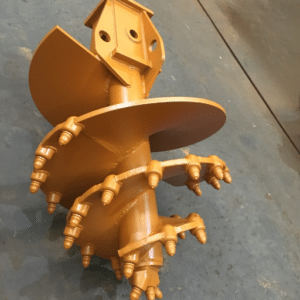
Whenever you’re setting up a fence, putting in trees, or dealing with house-related problems, the auger quickly becomes the one tool that does it all. The tool is there to drill very small holes in the ground or any surface with a lot of power and proficiency. It is indispensable in the eyes of professionals and DIY enthusiasts alike and is depended upon by them. Augers are not only highly efficient, but they are also power tools that have an impact on the task to be performed. The article answers the questions: why auger is a functional part of life and how it can be used constantly in various ways; find out more about the benefits of using augers and making what used to be tiring tasks before, much easier.
Understanding the Auger
What is an Auger?
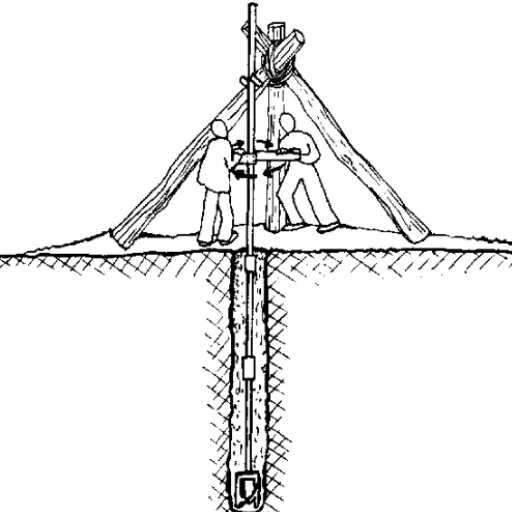
An auger is a spiral-shaped tool uniquely created to bore holes in various materials such as wood, soil, and ice. Its manner of operation is by making use of a blade that is shaped like a screw and rotates to get rid of the material and make a proper and clean opening. Augers may be in a variety of scales and designs, according to the work they are to be used for, and can also come as manual models for small tasks or as big versions that are motorized for heavy industrial work. This tool is in very common application not only for drilling post holes, but also for planting, ice fishing, and even mining. The capabilities of this tool have been achieved by the fact that it is able to convey material with minimum effort by turning it around the spiral blade while at the same time keeping the material roll going strong. In the past, the auger has been known to be a basic tool that is unpowered and it is only the material engineering that has made augers look different and be used in different ways.
Types of Augers: A Comprehensive Overview
Augers are classified into various types based on their specific application, design, and operating mechanism. Below is a detailed examination of the primary types of augers used across industries:
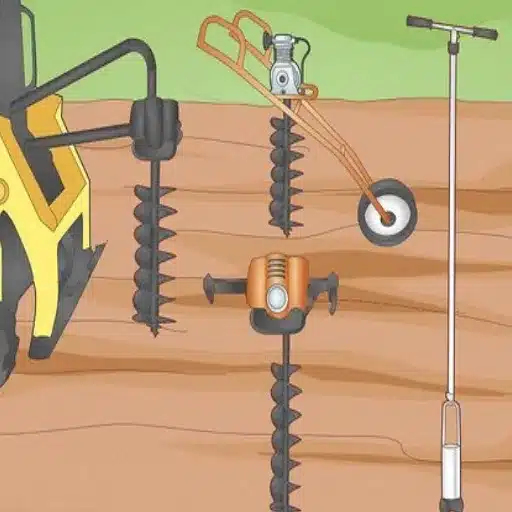
Hand Augers: Hand augers are handheld tools that are manually operated and widely used for a wide range of activities including soil sampling, gardening, and ice fishing. Normally, this kind of augers comes in a T-handle design that makes the user drilling easier by providing the necessary leverage. The fact that they can be carried around easily and that they are not very complicated makes them the most suitable choice when one has light work to do.
Earth Augers:The purpose of using earth augers is the drilling of the soil and other terrestrial materials. They can be in the form of manual, gas-powered or electric powered units. They are used to a great extent in the fields of agriculture, landscaping, and construction. The earth augers have blades that are specifically developed for being able to penetrate the soil in the best possible manner and to displace the material to the sides. This tool is a necessity for the task of creating post holes, planting trees, or soil testing.
Ice Augers: An ice auger is a specialized tool that is suitable for drilling work under thick ice, particularly situations of ice fishing and scientific investigations. These augers can be driven by manpower or made use of with the help of gas, battery, or propane. The cutting parts of these tools are very carefully engineered to work with the hardness and brittleness of ice while enabling the creation of clear and efficient holes.
Grain Augers: Grain augers, also known as screw conveyors, have a wide application in the field of agriculture for the purpose of transferring grain or other granular materials. The screws in these augers are usually very large helical screws put into a tube, thus allowing smooth material flow. One of the strong points of grain augers is that they are very effective in grain silo loading and unloading, which results in lesser labor and time consumed.
Grain Augers: Grain augers, also known as screw conveyors, have a wide application in the field of agriculture for the purpose of transferring grain or other granular materials. The screws in these augers are usually very large helical screws put into a tube, thus allowing smooth material flow. One of the strong points of grain augers is that they are very effective in grain silo loading and unloading, which results in lesser labor and time consumed.
Flight Augers: The inclusion of their helical screw design is the major feature of flight augers. Flight augers can often be seen used during drilling operations where there is a need for deep penetration such as piling, and other work of this sort. They are intended to be very effective in carrying waste materials and the drill to the surface in a way that makes drilling both efficient and neat.
By understanding the unique features and capabilities that each kind of auger possesses, professionals will be able to select the most appropriate tool for their particular needs. This will guarantee the highest possible level of efficiency, safety, and performance in the execution of their given tasks.
Common Auger Sizes and Their Applications
We offer augers in many different sizes, with each one custom-made to satisfy a specific need. The size and length of the auger have a major impact on where it will be and how it will perform – from household chores to big industrial projects.
Small Augers (2 to 6 inches in diameter): These augers are commonly used in gardening, landscaping, and fencing tasks. Their smaller size enables precise drilling for planting holes, irrigation systems, or lightweight post installations, ensuring minimal disturbance to the surrounding soil.
Medium Augers (6 to 12 inches in diameter): Medium-sized augers are ideal for domestic and commercial applications, such as building fence posts, installing signposts, or minor foundation preparations. They strike a balance between power and maneuverability, making them versatile tools for contractors.
Large Augers (12 inches and above): These augers are typically employed in heavy-duty applications like constructing deep foundations, installing power line posts, and performing geotechnical studies. Their larger diameters allow for substantial material removal and support high-efficiency operations in challenging soil or rock conditions.
It is indispensable to understand the technical specifications of and the correct use cases for each auger size. The thorough planning and strict adherence to safety protocols are the guarantors of optimal performance and of the risks of incurring no injuries at all while drilling.
How Augers Are Used in Construction

The Role of Augers in Building Projects
Augers are very useful in every way in a different variety of construction jobs; especially in earth drilling and excavation tasks. They serve as the irreplaceable on creating foundation piles, utility poles, and structural supports needed for drilling and powderization. Site development for the deeper stability of the land is one of the areas where they are constantly employed as the most efficient earth mover or rock breaker. Advanced technology in hydraulic auger setup typically is in use so that paired- up machines of current augers drill the more rock pieces of the earth and do it faster, more accurately. One more key factor to be highlighted by engineers is choosing the right type and diameter of the auger for soil or rock conditions and construction safety. Apart from that, it is really the design that auger has these days that makes it very powerful in its operation. Lowering downtime and cutting operational cost to the minimum are only some of the ways the already good auger technology can be further enhanced with more and more innovative design.
Power Augers vs. Hand Augers: Which to Choose?
Auger utilization in building increases the output of work and cuts the costs as well as greatly expands the scope of different operations. One of the major areas where the augers come in is boring the footing, building the wall that holds the soil or earth, and putting up the poles for electricity or telecommunication where accuracy and quickness are the most important factors. The modern auger systems with their powerful motor outputs and durable construction materials are made to encounter the toughest and the most unfriendly of soils and rocks with the least wear and breakages to happen during operation.
Furthermore, augers make excavation work easier by requiring less human resources and reducing the time it takes to complete the job. To cite an example, the use of hydraulic augers on the huge machines helps in utmost efficiency for big construction sites and through the way, actually, productivity is raised a lot and the safety measures are still followed. And, in fact, augers are useful in gaining green building points as they result in even less damage of soil apart from providing a more selective material removal option which is specifically good for those construction sites that are being protected environmentally.
The inclusion of high-tech features like adjustable speed control and auto positioning has upped the work of the augers. By delivering even more flexibility to project tasks, these advances never stop proving augers mainly as the go-to, must-have tools in today’s construction and engineering works.
Different Applications of Augers
Using Earth Augers for Landscaping
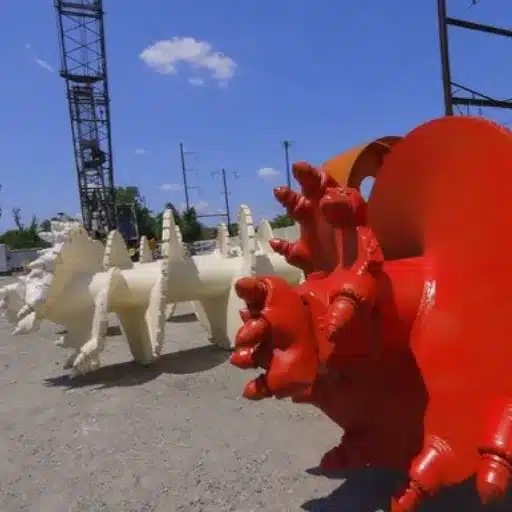
Earth augers are vitally important landscaping tools because they make it possible for us to do excavation work in a precise and efficient way. They are specially made to bore through the earth, rendering holes that are of the same size, and can be employed for tree planting, fence post erection, or garden fixture setting needs. Earth augers of today are very safe and user-friendly that causes little or no operator fatigue when used for a long time. The wide range of soil types that can be easily handled by them—like clay, sand, loam—makes them very suitable for all kinds of landscaping work.
The integration of high-torque motors and replaceable drill heads is among the most recent innovations in earth auger technology. Thus, users can change the drill bits quickly to comply with different project requirements thanks to the use of high-torque motors. A good example is the availability of specialized drill bits that can reduce soil disturbance to an absolute minimum, therefore, very suitable for projects aimed at preserving the entire environment, including landscape and vegetation. The prevalence of the eco-friendly designs in the market provides a clear outline of products that are being produced with the aim of fewer emissions and noise to the environment. In all these cases, we observe that the trends are indeed related to the principles of sustainable landscaping. The strict requirements of projects, therefore, make earth augers popular tools for both professional gardeners and DIY enthusiasts who seek a high degree of preciseness and efficiency in their undertakings.
Auger Drills in Agriculture: Enhancing Productivity
Auger drills were impactful agricultural tools and productivity enhancers since the very beginning. The adaptability of these tools to a multitude of tasks like soil sampling, planting, and even post-hole digging for fencing and trellis has made them an evolving market segment. The property of the precision and the minimum disrupted way of breaking different soil types is what makes the farm operations become more efficient. The newest models of such drills are typically powered with top-of-the-line engines or electric systems and offer different tenque and speed settings to match the requirements of the farm in different aspects. The continued development of the cutting-edge bit designs such as helical and carbide-tipped augers has contributed to the robustness of the drills and brings out their best even in challenging conditions, like compacted soils or rocks. Auger drills are developed and designed with the aim of reducing the workload and at the same time increasing the precision of a particular task that is being done, this appears in the planting or construction tasks: with this, the output and the use of resources by farmers are optimized, and they become the absolute property of the present-day farming methods.
One-Man Augers for Small Projects
The versatility and speediness of the one-man augers are at the top in the small scale projects, like garden planting, fence installation, or even decoration tasks. Only one person can manipulate such light and portable tools, still with the highest drilling accuracy, and no hard work effort at all. Among the upgrades which can be seen in the high-end models are the designs for the operator’s ease like ergonomically handles and the throttle control to allow for the higher precision, also the engines which can keep the power the same regardless of soil type are usually the heart of them. Furthermore, the recent progress in the blade material technology, e. g. using high-strength steel, alloy coating, or alike, helps to make the auger not only wear-resistant but also durable under tough conditions. Along with the efficiency provided by the one-man augers, when reliable equipment was needed for small-scale projects, these drills would be the perfect combination of these two features. Faster execution of a task with minimum physical effort is what one-man augers make practically possible for small tasks that need robust and easy-to-use equipment.
Buying an Auger: What You Need to Know
Factors to Consider When Buying an Auger
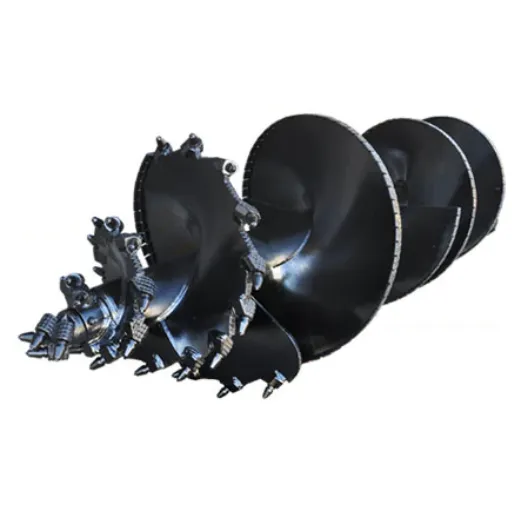
In choosing an auger, the assessment of the key specifications definitely comes to the occasion of the specified use. Initially, find out the auger necessary to style: with a manual, with a one-man engine, or with a two-man engine, according to the project size and the project type. The manual augers are for light works, whereas the driven one-man and two-man augers are for heavy works such as dense soil or more accuracy.
One more critical aspect is the power source of the auger. augers that are gas-powered generally provide more torque and are more suitable for heavy usage situations, however, they need to be maintained routinely. On the other hand, electric augers, as well as being quieter, more eco-friendly, and giving competent performances in the less intensive operations, are among the main contributors to this process. Furthermore, cordless mobility is a feature that can be found in the battery-powered models, making them a good choice for distant places.
The diameter and length of the drill bit should be in conformity with the needs of the application, be it the posting of the fences, planting of the trees or the setting of the foundation. Larger diameters and longer bits are suitable for the applications that are more demanding but at the same time may need to be coupled with more powerful engines in order to assure proper performance. The endurance of the drill bit itself is also one of the major factors to be considered while making the choice; materials like carbon steel or alloys constructed in a reinforced manner for drill bits can largely increase the resistance to wear and environmental harm.
In conclusion, think about ergonomics and user-friendliness, as they are the cause of the increase of both productivity and user comfort. Things like grips that reduce vibration, resistant and yet agile frames, and easy-to-understand controls could mean less tired operators when they work long hours. These variables directly affect the level of productivity and the amount of profit that can be obtained. So, placing these at the top of the list, the earth drill selected will deliver at peak efficiency, durability, and performance, all tuned specifically to the requirements of your project.
Where to Buy an Auger: Online vs. In-Store
The choice of buying an auger online or in a store depends on many crucial factors such as, the easy access of product specifications, customer support, and convenience. Online retailers usually provide a more in-depth description of the technical terms, user reviews, and a larger quantity of models. This way, the potential buyers can use the engine power, drill bit size, and materials composition as parameters in a comparison. In addition, the equipment suitable stores may not be located in the areas where online sellers would transport the products much cheaper than the physical stores.
On the other hand, shopping onsite allows performing the physical inspection of the post hole digger before the actual decision is made; this is especially important when it comes to the consideration of its quality of construction and the distribution of its weight. Further, the personnel in the store who have the know-how are able to address well projects and locations that are similar to the ones you have in mind and they may be of aid during the process of the choice in the event of technical requirements. Besides, getting a refund or exchange may be much simpler in the store, as a representative of yours is just around the corner and working on your request for a product and this enables a peace of mind that the issue will not last long.
For the purpose of maximizing the value, it is recommended to weigh the immediacy of the need, the level of acquaintance with the product, and whether the physical examination or the technical advice is indispensable. The combo of the online search for technical information and the in-store check may be the best way to go, guaranteeing the superior relationship of choice, assistance, and overall joy.
Maintaining Your Auger
Tips for Proper Auger Maintenance
Inspection Before and After Use:Conduct thorough inspections of your auger before and after each use. Check for signs of wear, such as cracks, rust, or dents on the auger flighting and shaft. Ensure that moving parts are free from debris and that all components are secured tightly to prevent operational inefficiencies or safety hazards.
Lubrication of Moving Parts:Proper lubrication is crucial for reducing friction and preventing undue wear on critical components. Use manufacturer-recommended grease or lubricant on bearings, drive chains, and other moving parts. Schedule regular lubrication intervals based on operating conditions and usage frequency.
Sharpening the Cutting Edges:The cutting edges of the auger blades need to remain sharp for efficient performance. Dull edges increase resistance and can overstrain the motor. Sharpen the blades periodically with appropriate tools or replace them when excessive wear is visible.
Clearing Obstructions and Debris:After each use, clear any residual soil, rock, or debris from the auger flighting, shaft, and surrounding areas. Obstructions can lead to uneven wear, reduce efficiency, and increase stress on the equipment during the next operation.
Protecting Against Corrosion:Store the auger in a dry, controlled environment to prevent exposure to moisture, which can accelerate corrosion. Applying a protective coat, such as anti-rust treatment, to metal parts can extend the lifespan of your equipment during long-term storage.
Checking Drive System Integrity:Regularly inspect the drive belts, gearboxes, and motor connections for signs of loosening, cracks, or damage. Ensure proper alignment and tensioning of belts and chains to prevent slippage and maintain efficient power transfer.
Adhering to these maintenance practices will not only maximize the performance of your auger but also significantly extend its service life, reducing the need for costly repairs and downtime. Ensure to consult the equipment’s manual for model-specific maintenance guidelines as recommended by the manufacturer.
Common Issues and Troubleshooting Your Auger
Read the following procedure on how to do this with your Earth Drill in getting acquainted with the market. If there are issues, first to be done is to draw the list of issues and next, prioritize them accordingly to determine the root cause of the problem and have it fixed as soon as possible. One common issue is the non-rotation of the earth drill and/or the unit stalling under load. The reason augers usually do not rotate under load is rocks, roots, or debris among others that have entered the flighting and are preventing it from moving. The case for such blockage can be cleared if the right approach is taken. Firstly, all operations should cease at once, and the machine be completely disconnected for safety around the area. Mainly, the obstruction should be done away with carefully. Keeping a regular check and cleaning of flighting space will prevent a lot of blockage issues.
Excessive vibration and unusual noise during operation are other common problems that may present themselves frequently. In most cases, these symptoms show that parts such as drive belts, bearings, or chains have either been worn out or are out of alignment. To get rid of this, I slowly check every one of the parts and make sure that they are well aligned and their tension is correct. Operationally efficient and safe that worn-out parts to be replaced in time with the manufacturer’s approved components. Also, the application of the proper lubricant to the moving elements in line with the manufacturer’s specifications and can have a big impact on wear and noise reduction.
Finally, material flow issues and clogging are the problems that I face most of the time. They can be the result of not only overloading but also using the auger for materials not meant to be handled. One can care for such troubles by thoroughly studying the equipment’s capacity requirements and refraining from overfeeding the auger. If the clogs happen, it is my advice to turn off the equipment and manually clear the material using not a big force because it is the auger that might get damaged this way. Observing these measures guarantees the facility’s nonstop operation and at the same time safeguards the machine and its long-term use.
Extending the Lifespan of Your Auger
Improve the quality of your auger and prolong its life by following these easy steps: first by maintaining it and only using it in ways that are ecologically friendly, from the time of purchase till the end of its life. The wise thing is to have a look from time to time: a very close look at the wear life signs like a piece of metal missing from the edge of your drill bit, missing screws, or strange vibrations during drilling. Getting to the bottom of the problems promptly will save you the money, time, and the whole machinery in the end as the small un-repaired defaults might lead to great failures. The third significant part of the process is to oil the machine. By keeping the running parts and bearings in a good oil state, the machine can reduce the friction and therefore wear and tear, this saved work will be a major benefit in the long run. Adhering to the manufacturer’s recommendations regarding the oils and their application frequency ensures a smooth run of the lubricating process in your machine for best results.
Proper storage conditions greatly affect the life of your auger, and besides the usage, the equipment should always be kept in a clean and a dry place. Rust intensifies in moist areas and is quite detrimental to the durability of the auger parts, particularly the metal ones. Regularly cleaning one’s auger after use will prevent dirt, debris, and even corrosive agents like salt or chemicals from slowly damaging the machine. This is why you should consider using rust inhibitors or protective coatings on augers if the storage period is longer than usual.
Finally, don’t overuse the auger or use it in the ways it is not meant to be. Working with the equipment within its limits will not overload the motor and mechanical parts and thus, prevent their wear out. Checking the user manual for specific limits and conditions to comply with will ensure that you are using the auger in the correct way. If you incorporate these practices into your regular operation, you will be not only prolonging the service life of the equipment but also keeping it fully functional always, and, thus, maximizing your return on the investment eventually.
Reference Sources
Auger Conveyors – Oklahoma State University Extension
This resource explains the role of auger conveyors, commonly used in agriculture for handling grain and feed on farms.
“Bunger Auger” – Scholars Junction, Mississippi State University
This academic archive discusses the historical use of augers, including their application in woodworking and barrel-making.
Augers and Bins – The Dairyland Initiative, University of Wisconsin
This page explores the use of augers in feed center operations, focusing on their capacity and efficiency in agricultural settings.
Foundation Manual Chapter 6 – California Department of Transportation
A comprehensive manual detailing the use of drilling augers in construction, particularly for cast-in-drilled-hole piles in various soil and rock conditions.
Frequently Asked Questions (FAQs)
What is an auger and how does an auger drill work?
One of the easier and quickest way to dig holes is by using an auger, a rotating metal pipe with one or more blades attached which cuts or scrapes soil as it rotates. Augers are commonly utilized for making holes to plant trees and shrubs, deck posts, or solar posts, and they clear the hole by means of the soil moving up and out. In contrast to other tools like gimlets or rigs, an auger is very much peculiar to soil removal and is able to make the deepest hole required with no heavy work in using shovel. The auger must be the right type and depth of the soil to avoid the drill clogging or being inefficient. The machine auger and power auger are powerful augers for digging larger holes, while a hand auger is efficient for shallow holes and small jobs.
How do I choose among auger sizes and common auger sizes for my project?
Deciding upon the common sizes of augers is reliant on whether your required application is related to larger plants or planting of trees and if you are placing fence or deck posts. The smaller auger bits with smaller diameters are just the perfect choice for a gardener with a smaller yard as he could use it for planting, transplanting, vegetable garden, herbs, or any such similar type of very common operations and other activities. Also, the larger augers can make holes for planting trees, solar posts, larger posts, or any other cases where large holes are needed, which includes making holes for other utilities requiring larger holes when compared to the earlier panels, poles, etc. Single-man auger choices and all the power auger types are coming up with the daisy-chain of diameters and lengths to cope with the ground conditions. On the other hand, the power remained the same or even got higher, till outstanding outputs become performed on the significant paper, though. For example, even the same turning speed during drilling, the performance was amplified. Anyway, as an end user, if you are getting a quality product, it doesn’t matter how fast the machine drills and how much power it uses if there are no stopped holes or not drilled at all as it was the case using the drop-hammer 50 years back.
When should I use a hand auger versus a power auger?
Loose soil or shallow hole by hand is pretty good idea: a hand auger is the best way to do it like that and be low on the money as well as have less noise. If you want to have the precision of hole digging in a spot and the access there is little, such as under old trees and big bushes, you can use them there and there shall be no disturbance made by the bigger augers. For planting trees or installing deck and solar post holes, or making the holes deeper into the ground and power auger or electric augers is a major time saver and reduction of physical effort. Single-operator hole drillers are also a good power tool and they have bigger power than the hand auger but are still good for one-man management. The choice of the auger drill type should be primarily established through calculating the depth and width of the holes needed.
Are augers used in construction different from garden augers?
In contrast to garden augers for gardening, the augers used in construction have a higher working capacity and are designed for making bigger holes in hard soils. When you are in construction, you could come across drilling rigs or large augers that are capable of deep drilling for foundations, piers or utility posts. On the other hand, garden augers and single-man auger units are made for the holes of bigger plants, fence posts, and deck posts. The cutting teeth of the construction augers might be significantly tough to cut or even scrape through the compact or rocky soils that could choke a conventional garden auger. So, always pick a right auger fit for the job, i.e., do not choose a garden hamd auger in heavy construcion work since it would be very inefficient and could even lead to safety issues.
How do I use an auger to dig fence and deck post holes safely?
Before you decide to use an auger for digging fence or deck posts, place markings, and test areas for any buried utilities and then pick the right auger bit diameter to get holes for bigger plants or posts if needed. If need be, first make a small hole with a pilot drill and then let the rotating metal shaft and the blades do their job instead of pushing/forcing, which could prevent the auger, from binding or throwing back at you. For bigger holes in the ground and heavier augers, consider the use of electric or powered augers to give more control and less effort to it. At the same time, remove the wet earth from time to time so that the auger can operate efficiently and do not put stress on the machine which will eventually result in having to hire and operate drilling rigs for very big jobs. So, saving time and energy and producing holes of even dimensions is what the auger does compared to using a shovel.
Can augers be used for planting trees and bushes or are they just for small holes?
Using augers, both small shallow holes and larger holes for tree and bush planting can be drilled by selecting the corresponding auger size and bit design. For trees people usually want bigger holes and bigger augers or drilling rigs can create such bigger holes faster than the traditional shovel or gimlets methods. When it comes to planting, it has to be made sure that the auger is operated to the exact depth and diameter the roots will have enough space and the soil will remain loose enough for the root growth. For lighter work like the garden, a hand auger or auger bit on an electric drill can also make shallow holes for bulbs and small plants. By digging fence or planting holes with an auger turnaround time and physical effort are significantly cut down as against manual digging.
Should I buy an auger or rent one, and what are the differences between electric augers and larger augers?
If you are into a lot of projects such as securing the deck through installing many deck posts, growing vegetables, or simply planting, I would suggest you buy an auger. This is especially true if you have already invested in some heavy DIY equipment because of their different nature and homeowner use policies—whereas, in the case of one-time big jobs, just rent one instead of spending much in purchasing one. The electric augers are quiet, they can be used for lighter to medium tasks, and they vibrate less; hence, they are considered more efficient. On the other hand, larger augers and power augers with a gasoline engine have more power so they can deliver a high torque to drill compacted soils. It might take two people to operate the bigger augers or you can have one-man drilling equipment with enough muscle to manipulate the spinning steel rod and the attached blade or blades. The decision of buying an auger versus renting drilling rigs for a very large project should be based on the type of the ground, the size and depth of the hole. No matter what, you should still adhere to safety rules, and do not forget that augers are the most efficient means of digging holes compared to just a spade.