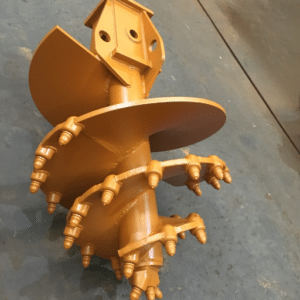
Comprehensive Guide to Techniques, Applications, and Efficiency in Modern Drilling Technology
Introduction to Rotary Drilling Rigs

Rotary drilling rigs are highly advanced machines designed to bore into the earth’s surface for exploration, extraction, and construction purposes. These sophisticated systems use rotating drill bits to cut through soil, rock, and various geological formations, providing access to valuable resources such as oil, gas, minerals, and groundwater.
Key Advantages of Modern Rotary Drilling
- Versatility: Capable of operating in diverse geological conditions
- Precision: Advanced control systems for accurate drilling
- Efficiency: Continuous rotary action maximizes penetration rates
- Safety: Automated systems and real-time monitoring
- Environmental Compliance: Sustainable extraction methods
What are Rotary Drill Rigs?
Rotary drill rigs are sophisticated drilling systems primarily used for creating boreholes, wells, and conducting geological exploration. They operate by rotating drill bits against subsurface materials, making them essential for accessing oil, natural gas, groundwater, and mineral deposits.
Modern rotary drill rigs incorporate cutting-edge technology including:
- Automated control systems for enhanced precision
- Real-time data monitoring for operational optimization
- Advanced safety systems including blowout preventers
- Environmental impact reduction technologies
Components of a Rotary Drill
| Component | Function | Key Features |
|---|---|---|
| Drill Bit | Formation cutting instrument | Tungsten carbide or diamond-tipped variants |
| Drill String | Transmits rotation and drilling fluid | High-strength tubular elements |
| Rotary Table/Top Drive | Provides rotational power | Enhanced operational efficiency in modern versions |
| Mud Pump System | Circulates drilling fluid | Cooling, cutting removal, borehole stabilization |
| Hoisting System | Raises and lowers drill string | Drawworks, wire rope, derrick/mast |
| Blowout Preventer | Critical safety mechanism | Prevents uncontrolled pressure releases |
| Power Supply | Energy source for operations | Diesel engines or electric motors |
The Evolution of Rotary Drilling Technology
Modern rotary drilling technology has undergone remarkable advancement since the late 19th century. Early rigs were simple mechanical devices requiring significant manual operation and lacking the precision of contemporary machines.
Modern Technological Innovations
- Digital Data Monitoring: Real-time parameter tracking and analysis
- Remote Operation Capabilities: Reduced on-site personnel requirements
- Predictive Maintenance: AI-powered equipment monitoring
- Automated Systems: Reduced human error and increased efficiency
- Environmental Controls: Minimized ecological impact
Types of Rotary Drilling Techniques

Primary Drilling Methods
| Drilling Method | Description | Best Applications | Key Advantages |
|---|---|---|---|
| Vertical Drilling | Conventional straight-down approach | Resources in horizontal strata | Simplicity, cost-effectiveness |
| Directional Drilling | Controlled deviation from vertical path | Inaccessible deposits, obstacle avoidance | Increased resource recovery, reduced surface disturbance |
| Air Rotary Drilling | High-pressure air circulation system | Hard, consolidated formations | Water conservation, faster drilling rates |
| Mud Rotary Drilling | Drilling fluid-based system | Soft to medium-hard formations | Borehole stability, efficient cutting removal |
| Reverse Circulation | Double-walled pipe system | Sample collection requirements | Large, uncontaminated samples |
| Dual Rotary Drilling | Separate power sources for casing and drill pipe | Unconsolidated formations | Enhanced stability, precision control |
Air Rotary vs. Mud Rotary Techniques
Air Rotary Advantages:
- Efficient in hard, consolidated formations
- Water conservation in arid regions
- Faster drilling rates in suitable conditions
- Cleaner samples for geological assessment
Mud Rotary Advantages:
- Superior borehole stability
- Effective in loose, unconsolidated formations
- Filter cake formation prevents collapse
- Excellent cutting removal efficiency
Understanding Dual Rotary Drilling
Dual rotary drilling represents a highly adaptable and efficient method for challenging ground conditions. This technique employs two independent rotary drives: one for casing rotation and another for the inner drill string.
Key Benefits:
- Reduced friction between casing and ground
- Straight, accurate holes in unpredictable geology
- Versatility across soil types (loose gravel to dense clay)
- Increasing adoption in geothermal energy projects
Applications of Rotary Drilling Rigs

Industry Applications Overview
| Industry Sector | Primary Applications | Depth Range | Success Metrics |
|---|---|---|---|
| Oil & Gas Exploration | Hydrocarbon extraction, reservoir access | Deep to ultra-deep | 80% of global energy wells |
| Water Well Drilling | Municipal, agricultural, industrial water supply | Up to 1,000+ meters | Reliable groundwater access |
| Geothermal Energy | Renewable energy reservoir drilling | High-temperature zones | 5% annual growth rate |
| Construction | Foundation works, infrastructure projects | Variable depths | Structural stability assurance |
| Mining & Exploration | Core sampling, mineral analysis | Deep exploration | 30% cost reduction vs. traditional methods |
Oil and Gas Exploration
E&P Industry Innovations:
- Advanced Drill Bits: 20% reduction in drilling time for unconventional reservoirs
- Real-time Data Monitoring: AI-powered subsurface analysis
- Horizontal Directional Drilling: Access to previously inaccessible reserves
- Machine Learning Optimization: Reduced non-productive time (NPT)
Geothermal Applications
Electricity Generation
Geothermal power plants utilize natural steam and hot-water reservoirs to rotate turbines for electricity generation. According to the U.S. Energy Information Administration (EIA), global geothermal electricity generation capacity reached nearly 16 GW in 2021.
Direct Heating Applications
- Residential & Commercial: District heating systems
- Agricultural: Greenhouse heating, aquaculture farms
- Industrial: Process heat applications
- Cost Savings: 80% operational cost reduction vs. conventional heating
Geothermal Heat Pumps (GHPs)
These systems utilize ground temperature stability for efficient building heating and cooling, reducing energy requirements by up to 50% compared to traditional HVAC systems.
Emerging Applications
- Desalination Processes: Renewable freshwater source in arid regions
- Mining Operations: Mineral extraction heating, processing cost reduction
- Manufacturing: Steam applications, energy efficiency maximization
Water Well Drilling Services
Modern water well drilling services provide groundwater access through wells designed according to specific geological and hydrological data. Advanced technologies optimize drilling processes, including rotary drilling and hydraulic fracturing methods.
Cost and Reliability Factors:
- Variable Pricing: Depends on depth, location, and subsurface conditions
- Long-term Value: Reliable water source for areas lacking municipal supply
- Technological Enhancement: Real-time monitoring and automated pumping systems
- Infrastructure Importance: Essential for agricultural, industrial, and domestic use
Equipment and Machinery in Rotary Drilling

Key Equipment Components
| Equipment Category | Primary Components | Function | Modern Enhancements |
|---|---|---|---|
| Drill String | Drill pipes, drill collars, tubular elements | Transmit rotation and drilling fluid | High-tensile steel, aluminum alloys |
| Drill Bits | PDC bits, roller cone bits | Formation cutting | Polycrystalline diamond compact technology |
| Rotation Systems | Rotary table, top drive | Provide torque to drill string | Enhanced operational safety and control |
| Circulation Systems | Mud pumps, fluid systems | Cool bit, carry cuttings, stabilize borehole | Advanced fluid composition and monitoring |
| Safety Equipment | Blowout preventers (BOPs) | Pressure control, blowout prevention | Hydraulic and electronic controls |
Advanced Features of Modern Rotary Drill Rigs
Automated Pipe Handling Systems
- Reduced manual labor requirements
- Enhanced operational safety
- Minimized human intervention in high-risk areas
- Decreased on-site injury potential
Real-Time Data Monitoring and Analysis
- Key Parameters: Weight on bit (WOB), rate of penetration (ROP), torque
- Data Processing: Advanced software analysis for operational decisions
- Communication Technologies: Remote monitoring capabilities
- Predictive Analytics: Equipment failure prevention
Top Drive System Advantages:
- Superior torque control compared to traditional rotary tables
- More fluid drilling operations
- Enhanced operational efficiency
- Reduced drilling downtime
- Consistent drilling performance
Advanced BOP Control Systems
- Response Time: Automatic wellbore sealing within milliseconds
- Multi-layered Safety: Multiple barrier protection against pressure surges
- Control Technology: Advanced hydraulic and electronic systems
Directional Drilling Capabilities
- Horizontal Drilling: Extended reservoir contact
- Precise Targeting: Specific reservoir placement
- Environmental Benefits: Reduced surface disturbance
- Production Enhancement: Increased extraction rates
Efficiency and Performance of Rotary Drilling

Performance Optimization Factors
Key Efficiency Drivers:
- Continuous Rotary Action: Consistent formation penetration
- Flexible Subsurface Adaptation: Various geological conditions
- Enhanced Drill Bit Design: Improved cutting efficiency and durability
- Automated Control Systems: Real-time parameter optimization
Technology Integration Benefits
| Technology | Efficiency Improvement | Key Benefits | Implementation Impact |
|---|---|---|---|
| Machine Learning Algorithms | Up to 25% operator efficiency increase | Predictive maintenance, failure prevention | Reduced downtime, cost savings |
| Advanced Sensors | 15% improvement in ROP | Real-time parameter monitoring | Enhanced drilling accuracy |
| Low-emission Engines | Significant fuel consumption reduction | Environmental impact minimization | Sustainable operations |
| Synthetic Drilling Fluids | Reduced ecological footprint | Improved performance, environmental compliance | Regulatory alignment |
Factors Affecting Drilling Performance
Geological Factors
- Formation Type: Rock hardness and composition variations
- Porosity: Formation density and fluid content
- Pressure & Temperature: Subsurface condition variations
- Abrasiveness: Equipment wear considerations
Operational Parameters
- Weight on Bit (WOB): Applied drilling force optimization
- Rotary Speed: RPM optimization for formation type
- Drilling Fluid Properties: Viscosity and chemical composition
- Cutting Removal Efficiency: Annular velocity optimization
Equipment Configuration
- Drill Bit Selection: Formation-specific bit design
- Downhole Motors: High-performance motor assemblies
- Control Systems: Software-driven automation
- Real-time Monitoring: Sensor-based data collection
Performance Optimization Considerations:
Critical Success Factors: The combination of geological assessment, operational parameter optimization, and equipment selection determines drilling efficiency. Recent industry trends emphasize digitalization and automation to improve decision-making, reduce costs, and achieve sustainability goals.
Future Trends in Rotary Drilling Efficiency
Emerging Technologies:
- AI-Powered Predictive Analytics: Equipment failure prediction and energy optimization
- Machine Learning Models: Real-time sensor data interpretation for operational decisions
- Hybrid Energy Systems: Renewable energy integration with conventional power sources
- Automation Advancement: Casing and pipe handling procedure automation
The integration of digital and mechanical technologies is driving rotary drilling toward a more dependable, cost-effective, and environmentally sustainable future.
The Importance of Precision in Drilling
Achieving absolute precision in drilling operations is crucial for maximizing resource recovery while minimizing costs and environmental impact. Advanced technologies have revolutionized accuracy in well placement and operational efficiency.
Precision Technologies
- Real-time Data Monitoring: Continuous parameter tracking and adjustment
- 3-D Geological Mapping: Subsurface visualization and planning
- Machine Learning Algorithms: Pattern recognition and optimization
- Automated Control Systems: Reduced human error and increased consistency
References
-
Rotary Rigs Overview
Penn State University – Dutton Institute
This resource explains the mechanics and components of rotary rigs, including their operation and applications. -
The Rotary System on Drilling Rigs
Penn State University – Dutton Institute
This article provides detailed insights into the rotary system, which is essential for the functioning of drilling rigs. -
Rotary, Kelly, Swivel, Tongs, and Top Drive
University of Texas – PETEX
This document discusses the components and operation of conventional rotary drilling rigs.
Frequently Asked Questions (FAQ)
Primary components of a rotary drilling rig
A rotary drilling rig largely consists of the rotary table and kelly, the kelly drive mechanism, and the drill string. These components provide the ability to impart rotary action to the drill to enable its penetrating action into different types of ground. The kelly bar is important in the transfer of torque and stabilizing the drill during drilling operations.
How does a rotary drill rig function in difficult ground conditions?
Generally, the rotary drills adapt to difficult ground conditions by employing different techniques. Where ground conditions become challenging, the rotary table and kelly system apply force to the drill string to ensure penetration. Also, special bits may be used to achieve better performance in overburden or rocky conditions.
What is the significance of a kelly drive in rotary drilling?
The kelly drive in rotary drilling transmits rotary torque to the drill bit and, therefore, connects the rotary table while allowing vertical movement of the drill string. This drive is highly used in deep drilling projects where accuracy is highly demanded.
What kinds of drilling projects are rotary drilling rigs suitable for?
The rotary drilling rigs can perform a diversity of drilling, including those for water well drilling, geothermal temperature assessment, and oil and gas extraction. Their adaptability to various terrains makes them suitable for exploration in both urban and from distant areas.
How do rotary drill rigs have rod handling efficiency?
Efficient rod handling in a rotary drill rig is afforded by automatic rod handling systems that quickly and safely allow for the change of drill rods. This reduces downtime during drilling and maximizes production benefits, especially for large-scale drilling.
What are the latest trends in rotary drilling equipment?
The latest trends in rotary drilling equipment involve advancements in the design of kelly bars and drill bits that lead to enhanced efficiency in a variety of soil conditions. These innovations make the rig more efficient, cut down operating costs, and bolster the ability to contend with different drilling challenges.
What is the difference between dual rotary and air rotary?
Air rotary drilling method uses considerably more air as the drilling fluid to dislodge cuttings from the hole, whereas dual rotary drilling combines between air and mud technique, said to provide a better control on hard ground conditions. This dual method hence increases the capacity of the rig to penetrate overburden more practically and is especially suited for difficult geological formations.
What are the usual uses of rotary drilling in the industry?
Rotary drilling is widely used in the exploration industry for extracting natural resources, including oil, gas, and minerals. It’s also applied in construction for foundation drilling and in environmental projects for soil sampling and remediation. The versatility of rotary drilling rigs makes them indispensable in various sectors.